Showing posts with label Wilkie Collins. Show all posts

Thursday, October 18, 2012

The Curious Case Of Wilkie Collins And The Dry Old Tart

Interviewing writers can be a bit of a tricky business these days. No longer is it good enough, apparently, to take five minutes beforehand to strategically dog-ear a few corners in their latest tome and then plonk it down on the table and ask them earnestly where they get all their wonderful ideas. These days, for some odd reason, writers expect you to have read at least one of their books before the interview commences, and preferably the current one. Strange, I know, but there it is.
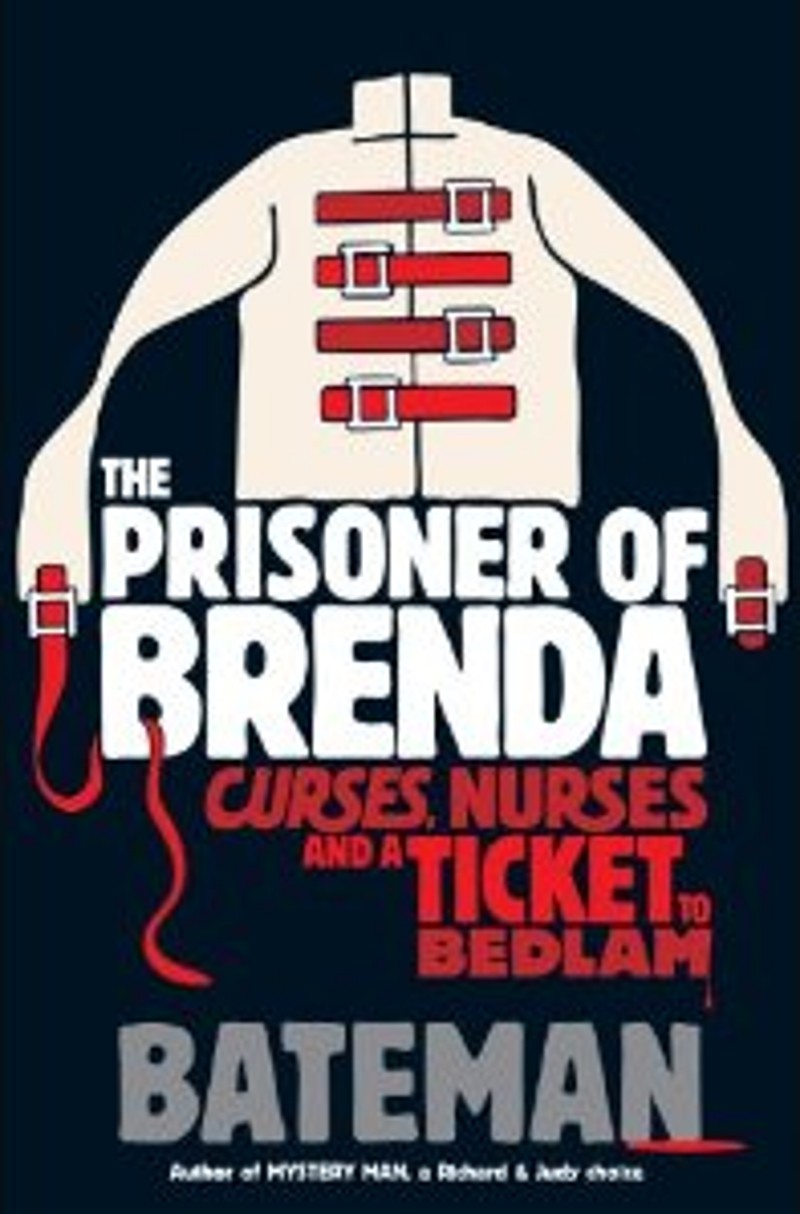
  Anyway, I’m reading the latest Mystery Man offering from The Artist Formerly Known as Colin Bateman, aka THE PRISONER OF BRENDA (Headline, published October 25th), and very funny it is too, studded with some very nice digressions on the nature of crime fiction and not a few opinions on the quality of the books Mystery Man stocks in his crime fiction bookshop. To wit:
“He probably didn’t know that Sergeant Cuff was one of the first and greatest of fictional detectives, appearing in 1868 in Wilkie Collins’s THE MOONSTONE - a book, incidentally, hailed by Dorothy L. Sayers as probably the very finest detective story ever written. Dorothy was no slouch herself, if a bit of a dry old tart.” (pg 62)
  A pithy appraisal, I’m sure you’ll agree. And there’s plenty more where that came from, although fans of the Scandinavian crime novel may want to gird their metaphorical loins before cracking the spine …

Thursday, March 10, 2011

Nobody Move, This Is A Review: FAULKS ON FICTION: GREAT BRITISH CHARACTERS AND THE SECRET LIFE OF THE NOVEL by Sebastian Faulks

Lists are fine things, particularly if you’re in an argumentative mood, and FAULKS ON FICTION, being a list of great fictional British characters, is especially provocative. Faulks, the author of ‘Birdsong’ and other very fine novels, has divided his book into four headings: ‘Heroes’, ‘Lovers’, ‘Snobs’ and ‘Villains’, offering seven examples in each section. Thus the book takes us on an odyssey through British literature that begins in the Caribbean with ROBINSON CRUSOE and meanders right through to the present day, culminating in Faulks’ take on Barbara Covett, the villain of Zoë Heller’s NOTES ON A SCANDAL.
  Along the way we encounter some of the greats of the British novel, including Jane Austen, Charles Dickens, George Orwell, Henry Fielding, Emily Brontë and Thomas Hardy.
  Given that the book was written as a tie-in with the recent BBC series of the same name, the style is unsurprisingly light and breezy. It’s also very readable, in part because Faulks spends a good chunk of his introduction debunking the various literary critiques that bedevilled the development of the novel in the late 20th century. It may be ‘old-fashioned’ he says, but he is determined to treat the characters as if they were real people, gauging their worth in terms of the impact they’ve had on the reading public.
  It’s a laudable ambition, although Faulks’ modus operandi works better for some characters than others. When writing about personal favourites, such as Emma Woodhouse or Sherlock Holmes, Faulks is intensely engaging (although prone to hyperbole: “Is there no flaw in this dazzling, Mozartian performance?” he wonders of Jane Austen’s EMMA). On the other hand, some chapters have a cursory feel, and read like little more than synopses with occasional digressions.
  What is most disappointing about the collection is its predictability. “The novel was, from the start, a popular and middle-class form,” says Faulks during his chapter on Fielding’s TOM JONES, and his selection of characters seems determined to prove that the novel - or more properly, the literary novel - is still very much a middle-class obsession. The roll-call of names will be familiar to most readers, from Daniel Defoe to Dickens, Jane Austen and Emily Brontë to William Golding and Doris Lessing, up to the present day and Martin Amis, Alan Hollingsworth and Monica Ali.
  In fact, and despite the ‘British’ flavour promised in the subtitle, the collection is a very English one, even when the characters under discussion are marooned on a desert island, mired in the Indian Raj, or immigrants from Bangladesh.
  Furthermore, there is very little that is challenging to the status quo. No Lawrence Durrell, for example, who was being touted in the 1960s as the next James Joyce. Indeed, there’s no James Joyce. John Fowles merits only a line or two; Mary Renault only one, and that in terms of her early, ‘lesbian’ novels. Olivia Manning goes unmentioned, as does Kazuo Ishiguro, while Jonathan Swift, Mary Shelley and Robert Louis Stevenson merit only token references, if that.
  Stevenson, perhaps above all others, has good reason to be miffed at his exclusion. Long John Silver and the Dr Jekyll / Mr Hyde doppelganger are two of the most memorable characters in the history of the novel, and it beggars belief that not even one of Stevenson’s heroes or villains was deemed worthy of inclusion.
  One non-literary character who did sneak into the collection is James Bond, in the ‘Snobs’ section of the book. Unfortunately, Faulks does himself - and his argument in favour of literary snobs - no favours by spending most of the chapter talking about his own very enjoyable experience of writing a Bond novel, DEVIL MAY CARE (2009). Not that there is anything wrong with the chapter per se, but it’s telling that Faulks’ mini-biography at the end of the book lists all of his own novels bar DEVIL MAY CARE.
  This snobbishness about the literary novel reaches a climax late in the collection, when Faulks discusses Wilkie Collins’ THE WOMAN IN WHITE, which is regarded as one of the earliest examples of the thriller. Rather than celebrate the crime genre on its own terms, however, Faulks prefaces his exploration of the novel’s villain, Count Fosco, by recounting how plot-driven novels fell out of favour in the 20th century, only to be reinvigorated not by the various genre fictions of crime, science-fiction and romance, but by Proust’s A LA RECHERCHE DU TEMPS PERDU and Flaubert’s MADAME BOVARY. Were he not so serious, the proposition would be laughable.
  At times, Faulks is so beautifully precise that you almost forgive him his blinkered outlook. The happy-go-lucky Tom Jones is “a jolly cork on a choppy sea”; writing about love, or Graham Greene’s version of same, Faulks says, “All culture is for it; almost all history is against it.”
  Such insights are few and far between, however. FAULKS ON FICTION makes for an entertaining read, but it’s little more than a primer for those who have forgotten the main plot points of some of the great English novels. - Declan Burke

  This review was first published in the Sunday Business Post
Friday, February 18, 2011

“Ya Wanna Do It Here Or Down The Station, Punk?”: Lesley Thomson

Yep, it’s rubber-hose time, folks: a rapid-fire Q&A for those shifty-looking usual suspects ...

What crime novel would you most like to have written?
THE WOMAN IN WHITE by Wilkie Collins. I read this in a weekend when I was in my early twenties. Count Fosco can still give me nightmares.

What fictional character would you most like to have been?
Lucy in THE LION, THE WITCH AND THE WARDROBE. She is courageous and generous and makes the most of life. While being the youngest in a big family, she has a great sense of self. I would still like to be Lucy.

Who do you read for guilty pleasures?
It used to be crime fiction of any kind. I am no longer apologetic about how I spend my time, and free of a punitive voice, read what I like. Any vestiges of guilt are confined to Hello magazine at the dentist.

Most satisfying writing moment?
Writing one chapter of A KIND OF VANISHING to the soundtrack of Kate Bush singing ‘Under the Ivy’. I was focussed, immersed in the story and moved by the music: I did it in one draft.

The best Irish crime novel is …?
FELICIA’S JOURNEY by William Trevor. Another book I wish I had written. However, I am glad to have been a reader, deep in Trevor’s world, unsure what would happen next.

What Irish crime novel would make a great movie?
As above. The tension and the banality that Trevor sets up would transfer effectively to the big screen. I know it was made about eleven years ago. I have not yet seen it.

Worst / best thing about being a writer?
This is where my guilt resides. It hangs like a pall of smog for words that are not being written as I read, walk, eat: do anything except face the blank ‘page’. The page is no longer blank and I am miserable about what I have written. I plod on as the smog descends. After a while the sun comes out. There is air in the room. My characters take on lives of their own. The world is a richer place, as a writer, I can express experience in words as well as by living and reading.

The pitch for your next book is …?
Put aside a rainy afternoon, choose your favourite food and find your favourite place. Are you sitting comfortably? Then I’ll begin …

Who are you reading right now?
THE EYES OF THE SKIN: ARCHITECTURE AND THE SENSES by Juhani Pallasmaa. A Finnish architect who writes about how we engage with buildings and with the world. It is an inspiring, life-enhancing book. Alongside this I am tucking into the COLLECTED GHOST STORIES by M. R. James. A fabulous treasure trove of creaking mansions and faceless phantoms be-knighting crusty archaeologists who should be minding their own business. I love James’s intimate story-telling style.

God appears and says you can only write OR read. Which would it be?
Write, but what sort of God would do that to me?

The three best words to describe your own writing are …?
Compelling. Challenging. Witty.

Lesley Thomson’s A KIND OF VANISHING is published by Myriad Editions.

Sunday, January 30, 2011

Nobody Move, This Is A Review: THE INVENTION OF MURDER by Judith Flanders

Cain invented murder, of course, but Judith Flanders’ splendidly lurid title is entirely appropriate. What makes THE INVENTION OF MURDER: How the Victorians Revelled in Death and Detection and Created Modern Crime a compelling read is not the grisly murders Flanders documents in such meticulous detail, but the grotesque appetite the Victorians developed for fresh blood.
  This is Flanders’ fourth book on Victorian society, and the pages teem not only with black-hearted murderers, devious poisoners and outrageous miscarriages of justice, but also with the minutiae of day-to-day Victorian life. Thus the book is not simply a list of the most famous murders of the period (John Thurtell, Burke and Hare, Jack the Ripper) but also provides a comprehensive dissection of Victorian society, and particularly its evolving understanding of crime, class, justice and policing.
  Flanders’ theme, however, is the representation of murder. She quotes, approvingly, Thomas de Quincey’s ironic commentary on the public appetite for gore in her opening chapter, ‘Imagining Murder’: “‘Pleasant it is, no doubt, to drink tea with your sweetheart, but most disagreeable to find her bubbling in the tea-urn.’ … But even more pleasant, he thought, was to read about someone else’s sweetheart bubbling in the tea urn … for crime, especially murder, is very pleasant to think about in the abstract …”
  There are no cases documented here of sweethearts bubbling in tea urns, but it wasn’t for a lack of imagination on the part of the Victorian chroniclers of crime. The first major case Flanders deals with is that of John Thurtell, a decadent playboy who murdered his associate Joseph Weare over a gambling debt in 1823. Thurtell was no criminal mastermind, and the evidence against him amounted to a cut-and-dried case, but what is shocking to the modern mind is the extent to which the media was allowed to comment on the case. Flanders is excellent on the development of ‘broadsides’, cheap pamphlets hawked on street corners for the delectation of a blood-thirsty working-class. But even the most prestigious of the era’s newspapers were happy to print the kind of unfounded allegations and prejudicial rumours that today would have seen Thurtell walk away from court a free man, unable to obtain a fair trial.
  Thurtell’s guilt might have been plain for all to see, but where Flanders excels is in her excavation of cases in which conviction (and the almost inevitable public execution) were preordained, regardless of the evidence. Eliza Fenning, a servant girl who was accused of attempted murder by poisoning in 1815, is probably the best example. “Her terrible story was inextricably bound up with class anxiety, with fear of the mob, with hierarchy and social structure,” writes Flanders. Fenning, who was undoubtedly innocent of the charge of attempted murder, was convicted on a mish-mash of hearsay and confused testimony, a victim of paranoia and prejudice. Flanders’ account of the tawdry episode is a superb example of the complex interplay of forces - rudimentary policing, social change, a system of justice in dire need of transparency and accountability - which doomed many of those who appeared before men who prided themselves on their reputation as ‘hanging judges’.
  Fenning became notorious after the event, the subject of ‘broadsides’, acres of newspaper print and theatrical productions. In fact, if there’s a caveat to this book, it’s one of repetition: determined to explore each case to its fullest extent, Flanders is meticulous in exhaustively detailing the consequences of each case. Her devotion to her subject cannot be faulted, but once the pattern is established (murder, trial, representations in various media), the reader may well find him or herself skipping whole chunks of Flanders’ research.
  Curiously, the real murder rate was relatively low. In 1810, for example, the murder rate in Britain was 0.15 per 100,000 people; for comparative purposes, the murder rate in Canada in 2007-2008 was 0.5 per 100,000. Nonetheless, crime-influenced theatre was massively popular for the Victorians: “in 1866 there were 51,363 nightly seats in twenty-five London theatres,” Flanders writes, a figure which only applies to legitimate theatre. Queen Victoria herself attended a production of Dion Boucicault’s ‘The Colleen Bawn’ three times in one fortnight.
  The evolution of policing from a rudimentary arrangement of nightwatchmen prowling a particular parish into a more sophisticated organisation devoted to detection as well as prevention provides Flanders with another sub-plot. That development is reflected in the embryonic crime novel, with Flanders crediting Charles Dickens as one of the genre’s early leading lights, alongside Wilkie Collins.
  By then the Victorian lust for blood, further sharpened by the likes of Conan Doyle’s fictional Sherlock Holmes, and the horrifyingly real crimes of Jack the Ripper, was firmly established, allowing Flanders to conclude thusly: “By the start of the new century, therefore, a love of blood could be indulged in safely and securely, without any fear of an ugly reality bursting in. Instead, oceans of blood could cheerfully be poured across the stage, across the page, in song and in sermon. Murder was, finally, an art.” - Declan Burke

  This review first appeared in the Sunday Business Post.

Monday, September 6, 2010

Make Mine A Shandy

An intriguing proposition hoves over the horizon, being Michael Sheridan’s true crime offering MURDER AT SHANDY HALL: THE COACHFORD POISONING CASE. To wit:
Cork, May, 1887. Murder stalks the countryside. Against a tranquil rural backdrop the sleepy County Cork village of Dripsey, near Coachford, a sensational Victorian murder is played out with a potent mix of love, lust, betrayal, and ultimately naked hatred. The entry of a young and beautiful governess into Shandy Hall, the home of a retired British Army surgeon Dr Philip Cross, acts as a catalyst for an act of horror that prompts suspicion, an exhumation, an inquest, and a charged courtroom drama that grabs newspaper headlines all over the world. The nation is transfixed by details of a murder which shatters the Victorian ideal of the home as a safe haven of privacy and comfort, and besmirches the blue-blooded reputation of an aristocratic line. The cast of real characters includes a cruel killer, cloaked in respectability; a beautiful and naïve governess; a blameless wife; a brilliant young pathologist; a canny and clever murder detective; two accomplished courtroom adversaries; a caring and emotional judge; and a notorious hangman. The unravelling of this true-life murder mystery will send a chill through your bones.
  Sheridan’s previous books include DEATH IN DECEMBER: THE STORY OF SOPHIE TOSCAN DU PLANTIER and A LETTER TO VERONICA: THE LAST DAYS OF VERONICA GUERIN, both true crime accounts. He’s not shy about raising the bar on himself, either. In his introduction, he has this to say:
“There is nothing ever new under the sun and the fact of murder echoes in our ears, in hour hearts and in our minds. And yet [murder] is an enduring mystery - one that drove the greatest writers over the generations, like Dickens, Dostoevsky, Wilkie Collins, Conan Doyle, Camus, Capote and Mailer to even greater heights of expression to get to its essence.”
  So - can Michael Sheridan’s SHANDY HALL cut the mustard alongside the greats? Only time, that notoriously doity rat, will tell …
Declan Burke has published a number of novels, the most recent of which is ABSOLUTE ZERO COOL. As a journalist and critic, he writes and broadcasts on books and film for a variety of media outlets, including the Irish Times, RTE, the Irish Examiner and the Sunday Independent. He has an unfortunate habit of speaking about himself in the third person. All views expressed here are his own and are very likely to be contrary.