THEY SAY EVERY FAMILY HAS SKELETONS IN THEIR CLOSET . . .For all the details, clickety-click here …
But what happens when you open the door and they won’t stop tumbling out?
For Adam and Beth the first secret wasn’t the last, it was just the beginning.
You think you can imagine the worst thing that could happen to your family, but there are some secrets that change everything.
And then the question is, how can you piece together a future when your past is being rewritten?
For fans of Liane Moriarty, Jojo Moyes and David Nicholls.
Saturday, February 28, 2015
Publication: YOU, ME AND OTHER PEOPLE by Fionnuala Kearney
On occasion we stray beyond our self-imposed remit of Irish crime fiction here at CAP Towers, and it’s in that spirit that I mention that Fionnuala Kearney published her debut novel, YOU, ME AND OTHER PEOPLE (Harper) this week. Quoth the blurb elves:
Friday, February 27, 2015
Exhibition: Ger Holland at dlr Lexicon
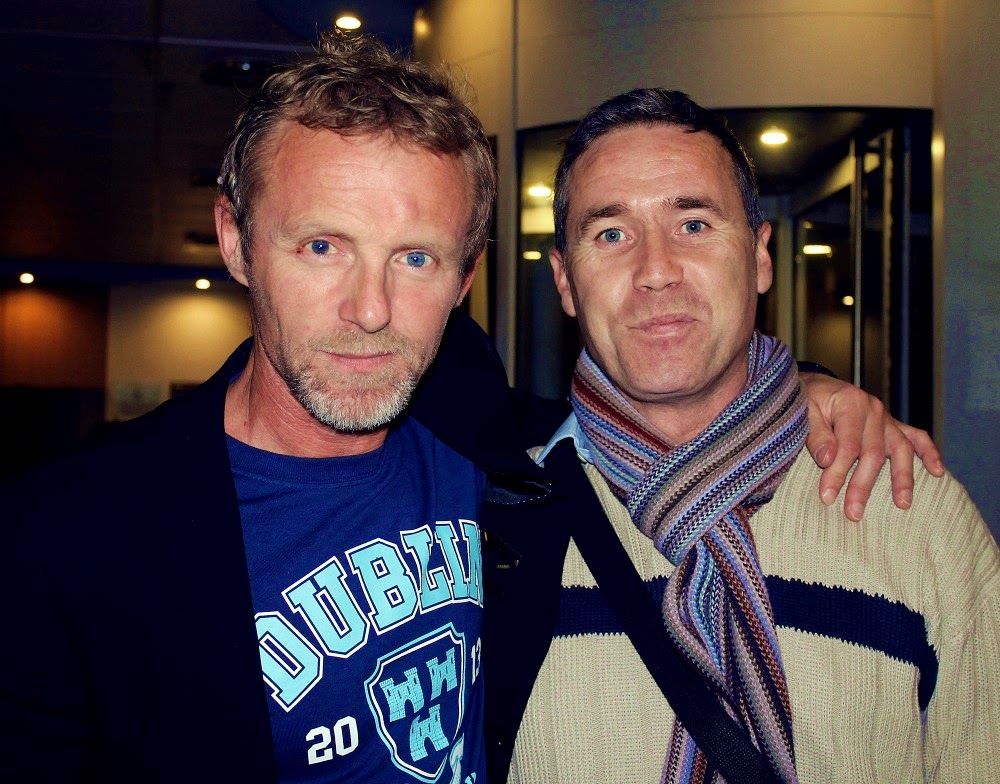
I’m not entirely sure why I look so constipated in this photograph with Jo Nesbo, although it’s possible that I’m being slowly strangled by that rare, multi-coloured Dun Laoghaire python that has leapt onto my neck. Anyway, the pic was taken by the very talented Ger Holland, who has become synonymous with photography at literary events in Ireland over least few years. Ger has her first exhibition of photographs next week, Tuesday March 3rd, and as you’d imagine, she’s delighted about it all:
“I’m delighted to welcome you all to my first exhibition in the dlr Lexicon in Dun Laoghaire, Co. Dublin. The exhibition features 40 photographs that I have taken of writers at the Mountains to Sea dlr Book Festivals over the last three years and from 16 different dlr Library Voices events, including Jo Nesbo, Donna Tartt, Ian McEwan and Armistead Maupin.”For all the details, clickety-click here …
Thursday, February 26, 2015
Review: EVERYTHING I NEVER TOLD YOU by Celeste Ng
I reviewed Celeste Ng’s EVERYTHING I NEVER TOLD YOU earlier this month in the Irish Times crime fiction column, a book that reminded me in many ways of Megan Abbott’s THE END OF EVERYTHING, which is one of the best novels I’ve read in the last decade or so. The review of Celeste’s book runs a lot like this:
Opening in 1977 in Middlewood, Ohio, Celeste Ing’s debut Everything I Never Told You (Black Friars) begins with a dramatic declaration: “Lydia is dead. But they don’t know this yet.” The 16-year-old Chinese-American daughter of James and Marilyn Lee, Lydia is discovered drowned in a local lake, but as the police investigation proceeds it remains unclear as to whether Lydia died as a result of murder, suicide or a tragic accident. Indeed, rather than advance the plot to the point where a motive and perpetrator are revealed, Celeste Ing is far more interested in exploring who Lydia Lee really was behind the various masks she wore to deceive her parents, her siblings and her high school friends. Ethnicity and assimilation (or the lack of it) is crucial to Lydia’s story: James Lee is a Chinese-American professor of American culture who has spent his entire life trying to blend in to a society that instinctively labels him as an outsider, while her mother, Marilyn, was frustrated in her youth in her ambition to become a doctor, and channels her aspirations through her daughter. What emerges is a heartbreaking portrait of a teenage girl struggling to cope with unbearable and conflicting pressures brought to bear by her parents, while also trying to deal with the more prosaic but no less difficult issues of adolescence, in a story that brings to mind Megan Abbott’s subversive take on the crime novel. Ranging back and forth from the 1970s to the 1950s – when James and Marilyn first met, and the seeds of Lydia’s tragedy were first sown – Everything I Never Told You is an affecting, compelling tale of quiet desperation. ~ Declan BurkeFor the rest of the column, which includes the current offerings from Paula Hawkins, Harri Nykänen and Rob Kitchin, clickety-click here …
Wednesday, February 25, 2015
Launch: DEADLY INTENT by Anna Sweeney
Deirdre Purcell will launch Anna Sweeney’s DEADLY INTENT (Severn House) on Friday, February 27th, at the Anam Cara Writers’ and Artists’ Retreat, Beara, Co. Cork, at 8.30pm. Quoth the blurb elves:
Maureen lies unconscious on a lonely track. Her husband blames a fellow holidaymaker at Nessa McDermott’s country house on Ireland’s enchanting Beara Peninsula. Two days later, a man’s body is found, strangled and dumped. Amid a frenzy of police, media and family pressures, former journalist Nessa has to find her own answers - but meanwhile, ambitious young policeman Redmond Joyce is also hellbent on identifying the murderer, and conflict between them grows as they close in on the horrifying truth. Translated from the Gaelic, this novel introduces a talented author with keen observation and detail, and marks the beginning of a series with Nessa and her ambitious policeman acquaintance.For those of you unfamiliar with the Beara Peninsula, Anna has written a piece for Writing.ie why the peninsula is the perfect setting for a murder mystery, with a sample running thusly:
“For my own crime novel Deadly Intent, my location of choice was the Beara Peninsula on Ireland’s wild Atlantic edge. On a coastline famed for its fifteen hundred miles of dramatic headlands, craggy mountains and sweeping beaches, Beara has some of the most magnificent scenery of all. And the more I got to know it, the more I could imagine writing about it.For the rest, clickety-click here …
“The trick was not to let all that the scenic beauty turn into a travelogue. The peninsula’s spectacular coves, remote valleys and secluded country lanes are havens of peace and tranquillity; but for my purposes, they could also hide grim and guilty secrets as well as victims’ bodies. In Beara as in most rural places, it’s normal to know your neighbours’ business; but in the face of fictional murder, a close-knit community could also abound in rumour and fear.”
Tuesday, February 24, 2015
Review: WAYFARING STRANGER by James Lee Burke
Best known for his series of books featuring Dave Robicheaux, James Lee Burke offers a fascinating historical crime novel in Wayfaring Stranger (Orion). Texas sheriff Hackberry Holland will be familiar to Burke’s fans, having first appeared in one of Burke’s earliest novels, Lay Down My Sword and Shield (1971), and more recently in Rain Gods (2009) and Feast of Fools (2011), but the Hackberry Holland we meet here is an older incarnation, a laconic US Marshal who made his reputation when he faced down the infamous outlaw John Wesley Hardin.
That ‘Wild West’ motif is a recurring one throughout Wayfaring Stranger, even though the story opens in Depression-era Texas, when the appearance of Bonnie Parker and Clyde Barrow make an indelible impression on the teenage Weldon Holland, Hackberry’s grandson and protégé. Weldon believes Bonnie and Clyde to be heroes who should be celebrated, as were earlier outlaws, for their courage and willingness to flout the law of the land; his grandfather, older and wiser, understands the danger to civilised society such loose cannons represent.
Later, another formative experience during the Battle of the Bulge gives Weldon a sense of perspective on life that his enemies lack when he starts drilling for oil in Louisiana during the post-WWII years. Unwilling to bend the knee to his social and economic superiors, and determined above all else to protect his Jewish wife Rosita, whom he met whilst escaping from the Germans during the war, Weldon finds himself caught up in a very dirty game of industrial espionage.
If the Dave Robicheaux novels have grown thematically repetitive in the years since Burke’s masterpiece The Tin Roof Blowdown (2007), as Robicheaux ruminates at length on his mortality, Wayfaring Stranger represents an intriguing tangent to his body of work (Burke has published 33 novels to date).
The acknowledged grandmaster of the American crime novel (he has won the Mystery Writers of America ‘Edgar Award’ three times, and received a Guggenheim Fellowship in 1988), Burke here employs the framework of the crime narrative to write a sprawling epic spanning the embryonic years of what he describes as ‘the New American Empire’. “Inside its crassness was a kind of meretricious innocence,” writes Burke, “one you might associate with a nation’s inception or perhaps its demise, like the twilight of the gods or an antebellum vision borrowed from the world of Margaret Mitchell.”
Bonnie and Clyde and a cameo appearance by Bugsy Siegel initially appear to root the story in a conventional tale of warring gangsters, but Burke has a more ambitious story to tell here. “There’s a difference between justice and vengeance,” Rosita tells Weldon, but while justice and / or vengeance are traditionally the goal of the crime novel’s protagonists, Burke has in mind the kind of hero that long predates the crime novel. “Roy says we’re wayfaring strangers, like the Canterbury Pilgrims trying to wend their way past the Black Death. He says death is the only reality in our lives.” Repeated references to Chaucer, Shakespeare, the chivalric romances and the Song of Roland give us a sense of the broader canvas Burke is working with here – indeed, Burke eventually goes so far as to allow Weldon to claim that “the Homeric epic doesn’t have to be discovered inside a book; it begins just west of Forth Worth and extends all the way to Santa Monica.”
Recounted in Burke’s familiar blend of Southern vernacular and lush, dreamy prose-poetry, Weldon Holland’s exploits may not reach the heights of Homer’s heroes, but Wayfaring Stranger is nevertheless a wonderfully ambitious and absorbing novel. ~ Declan Burke
This review first appeared in the Irish Examiner.
That ‘Wild West’ motif is a recurring one throughout Wayfaring Stranger, even though the story opens in Depression-era Texas, when the appearance of Bonnie Parker and Clyde Barrow make an indelible impression on the teenage Weldon Holland, Hackberry’s grandson and protégé. Weldon believes Bonnie and Clyde to be heroes who should be celebrated, as were earlier outlaws, for their courage and willingness to flout the law of the land; his grandfather, older and wiser, understands the danger to civilised society such loose cannons represent.
Later, another formative experience during the Battle of the Bulge gives Weldon a sense of perspective on life that his enemies lack when he starts drilling for oil in Louisiana during the post-WWII years. Unwilling to bend the knee to his social and economic superiors, and determined above all else to protect his Jewish wife Rosita, whom he met whilst escaping from the Germans during the war, Weldon finds himself caught up in a very dirty game of industrial espionage.
If the Dave Robicheaux novels have grown thematically repetitive in the years since Burke’s masterpiece The Tin Roof Blowdown (2007), as Robicheaux ruminates at length on his mortality, Wayfaring Stranger represents an intriguing tangent to his body of work (Burke has published 33 novels to date).
The acknowledged grandmaster of the American crime novel (he has won the Mystery Writers of America ‘Edgar Award’ three times, and received a Guggenheim Fellowship in 1988), Burke here employs the framework of the crime narrative to write a sprawling epic spanning the embryonic years of what he describes as ‘the New American Empire’. “Inside its crassness was a kind of meretricious innocence,” writes Burke, “one you might associate with a nation’s inception or perhaps its demise, like the twilight of the gods or an antebellum vision borrowed from the world of Margaret Mitchell.”
Bonnie and Clyde and a cameo appearance by Bugsy Siegel initially appear to root the story in a conventional tale of warring gangsters, but Burke has a more ambitious story to tell here. “There’s a difference between justice and vengeance,” Rosita tells Weldon, but while justice and / or vengeance are traditionally the goal of the crime novel’s protagonists, Burke has in mind the kind of hero that long predates the crime novel. “Roy says we’re wayfaring strangers, like the Canterbury Pilgrims trying to wend their way past the Black Death. He says death is the only reality in our lives.” Repeated references to Chaucer, Shakespeare, the chivalric romances and the Song of Roland give us a sense of the broader canvas Burke is working with here – indeed, Burke eventually goes so far as to allow Weldon to claim that “the Homeric epic doesn’t have to be discovered inside a book; it begins just west of Forth Worth and extends all the way to Santa Monica.”
Recounted in Burke’s familiar blend of Southern vernacular and lush, dreamy prose-poetry, Weldon Holland’s exploits may not reach the heights of Homer’s heroes, but Wayfaring Stranger is nevertheless a wonderfully ambitious and absorbing novel. ~ Declan Burke
This review first appeared in the Irish Examiner.
Sunday, February 22, 2015
Publication: THE LAKE by Sheena Lambert
Sheena Lambert’s debut thriller THE LAKE is published as an e-book by Killer Reads on March 19th, with the paperback to follow in June. Quoth the blurb elves:
September 1975. A body is discovered in the receding waters of a man-made lake, and for Peggy Casey, 23-year-old landlady of The Angler’s Rest, nothing will ever be the same. Detective Sergeant Frank Ryan is dispatched from Dublin, and his arrival casts an uneasy spotlight on the damaged history of the valley, and on the difficult relationships that bind Peggy and her three older siblings. Over the course of the weekend, Detective Ryan’s investigation will not only uncover the terrible truth behind the dead woman’s fate, but will also expose the Casey family’s deepest secrets. Secrets never meant to be revealed.For more on Sheena Lambert, clickety-click here …
Friday, February 20, 2015
Local Heroes: Seamus Smyth
I was going to write a Local Heroes post about Seamus Smyth, author of the brilliant QUINN, akin to the piece I wrote about Philip Davison recently, but then I stumbled across this from Ken Bruen, from waaaaay back in 2007. Take it away, Ken:
“Life sucks, yadda-yadda, so what else is new? But sometimes it sucks on a level that you want to scream, “Ah for fucksakes!” Being a crime writer always means registering low on the literary barometer but being an Irish crime writer? Just shoot yourself – unless you’re plugged into the usual mafia circle of same tired old names.For all the details on QUINN, clickety-click here …
“Seamus Smyth wrote a blistering debut titled QUINN back in 1999 and what should have been a major lift-off to a glittering career came to zilch. If he were writing in the UK or USA, he’d be mega. QUINN is a kick-in-the-face wondrous blitz of a novel. No tip-toeing Mr Nice Guy here: this is a first-person narrative of a psycho who operates in the Dublin underworld, the kind of novel Paul Williams would, ahem, kill to have written.
“The hero, Gerd Quinn, is straight from the tradition of Goodis through Thompson to the wry, sly humour of a Willeford. The writing is a dream, a style all Smyth’s own. He uses his anti-hero to pay homage to the noir genre and yet subvert it in a way only a true dark Irish craftsman could. It’s the kind of novel you read and think, ‘Just bloody mighty’, and immediately watch out for his next. But this is not just a great crime novel, it’s one hell of a novel, full stop. QUINN should be THE FRIENDS OF EDDIE COYLE for this decade, it’s that good and fresh and innovative.
“Let’s remedy one case of criminal neglect and get Seamus Smyth up where he belongs, right at the top of the genre, and allow a rare and unique talent to do what he was born to do - write the provocative novels this country deserves. Gerd Quinn states, ‘There’s no malice in what I do …’, which makes it one of the most ironic opening lines of any novel in light of what’s coming down the Smyth pike. QUINN is not only vital, it’s damn essential.” ~ Ken Bruen
Labels:
Charles Willeford,
David Goodis,
Jim Thompson,
Ken Bruen,
Seamus Smyth Quinn,
The Friends of Eddie Coyle
Subscribe to:
Posts (Atom)
Declan Burke has published a number of novels, the most recent of which is ABSOLUTE ZERO COOL. As a journalist and critic, he writes and broadcasts on books and film for a variety of media outlets, including the Irish Times, RTE, the Irish Examiner and the Sunday Independent. He has an unfortunate habit of speaking about himself in the third person. All views expressed here are his own and are very likely to be contrary.