Tuesday, October 30, 2012

Woe To Live On

Back in September I had the very great pleasure of reading alongside Daniel Woodrell (right) during the Mountains to Sea Festival in Dun Laoghaire. Even more enjoyable was the couple of hours before the event, when we sat down for a chat over some lunch, conducted an interview for the Irish Times, and then sat around some more, talking books and writing and whatnot.
  He’s a good guy, Daniel Woodrell. Understated, funny, with no affectations. The kind of quietly spoken that comes with carrying a big stick - or in his case, a big, big talent. I liked him a lot. And then, last week, after the interview finally appeared in the Irish Times, I received an email from him to say thanks, he liked the piece. A classy touch, and a pleasant surprise, but not really surprising, if you follow my drift.
  Anyway, here’s an excerpt from said Irish Times interview:
Despite announcing his ambition to be an author as early as the third grade, Woodrell turned his back on writing in his teens. “I dropped out of school when I was 16, when I gave up on the idea of being a writer, but I came back to it when I was 21,” he says. “I thought, No, I’m gonna sink or swim. I’m going all-in, see if I can do this or not. Which was good. I needed something severely challenging that I was willing to give myself to. I’d run a little wild around then. But that’s what those years are for, right?” Yet another throaty laugh. “So long as you don’t get too long of a sentence, you’re alright.”
  After a period in the Marines, Woodrell moved from the Ozarks to San Francisco and settled in to learn his craft. “As a high-school drop-out, I knew I wanted to write, but I wasn’t overly confident that I was going to be writing anything serious. I was happy enough with the idea that I could be a penny-a-word guy and survive.”
  At that point he wanted to write about anything – or any place – that wasn’t home. “Well, I was trying to survive as a writer and I knew that the nation in general doesn’t care about what happens in the Ozarks. I mean, I don’t want to be callous about it, but we all seemed to get over the Oklahoma bombing pretty quickly, and we’re never going to get over 9/11. Y’know? And so all of us out there are aware that you have to really be into writing about it, because there’s no advantage to it.”
  For the rest, clickety-click here …

Saturday, October 27, 2012

Get It On, Bang A Gong …

The warmest of congratulations to all the authors shortlisted for gongs at the Irish Book Awards launch last Thursday. It’s no easy thing, writing a book; and it’s harder still these days to get a book published. To write it well enough that it is recognised as worthy of a prize is certainly worth celebrating.
  It’s fair to say, I think, that the books nominated in the Crime Fiction category caused a number of finely plucked eyebrows to be raised at CAP Towers. Herewith be the list:
VENGEANCE by Benjamin Black.
SLAUGHTER’S HOUND by Declan Burke.
BROKEN HARBOUR by Tana French.
THE ISTANBUL PUZZLE by Laurence O’Bryan.
TOO CLOSE FOR COMFORT by Niamh O’Connor.
RED RIBBONS by Louise Phillips.
  Some of the crime fans I’ve spoken with have expressed surprise that two debut novels - by Laurence O’Bryan and Louise Phillips - made it onto the list, especially as there is a category dedicated to Newcomer of the Year, although I’d be inclined to applaud the fact that the judges were prepared to include books by newly minted authors (I was lucky enough to have my debut, EIGHTBALL BOOGIE, shortlisted for the Irish Book Awards when it came out in 2003). Besides, it looks like 2012 might well go down as a particularly quirky year for the Irish Book Awards - the Best Novel category, for example, contains no less than three collections of short stories, by Emma Donoghue, Joseph O’Connor and Kevin Barry.
  It might also be argued that Keith Ridgway’s HAWTHORN & CHILD and Marian Keyes’ THE MYSTERY OF MERCY CLOSE should have been nominated in the Crime Fiction category rather than Best Novel and Popular Fiction, respectively.
  Back with the Crime Fiction category, there are some glaring absences - although to be fair, I have no idea if any of the following books were even submitted for consideration. That said, a potential alternative shortlist would be a rather impressive thing, comprised of the following:
BLOOD LOSS by Alex Barclay.
A JUNE OF ORDINARY MURDERS by Conor Brady.
THE LAST GIRL by Jane Casey.
THE NAMESAKE by Conor Fitzgerald.
THE NAMELESS DEAD by Brian McGilloway.
THE COLD COLD GROUND by Adrian McKinty.
  There were also very fine novels this year from Michael Clifford (GHOST TOWN), Claire McGowan (THE FALL), Casey Hill (TORN), Matt McGuire (DARK DAWN) and Anthony Quinn (DISAPPEARED).
  As for the actual Crime Fiction list, I was particularly pleased to see Niamh O’Connor finally receive the recognition she deserves. I was also very pleased to find my own name there, as you may imagine, especially as SLAUGHTER’S HOUND is a very different book to my previous offering, ABSOLUTE ZERO COOL, which was also nominated last year. Mind you, I’ve said all along this year that it’ll take a hell of a book to beat Tana French’s BROKEN HARBOUR, and given that the only Irish crime novel capable of doing so - Adrian McKinty’s THE COLD COLD GROUND - hasn’t been shortlisted, I’d imagine that Tana French will be scooping the gong on November 22nd.
  So there it is - my two cents on the IBA Crime Fiction shortlist. If anyone has any thoughts, the comment box is open …

Wednesday, October 24, 2012

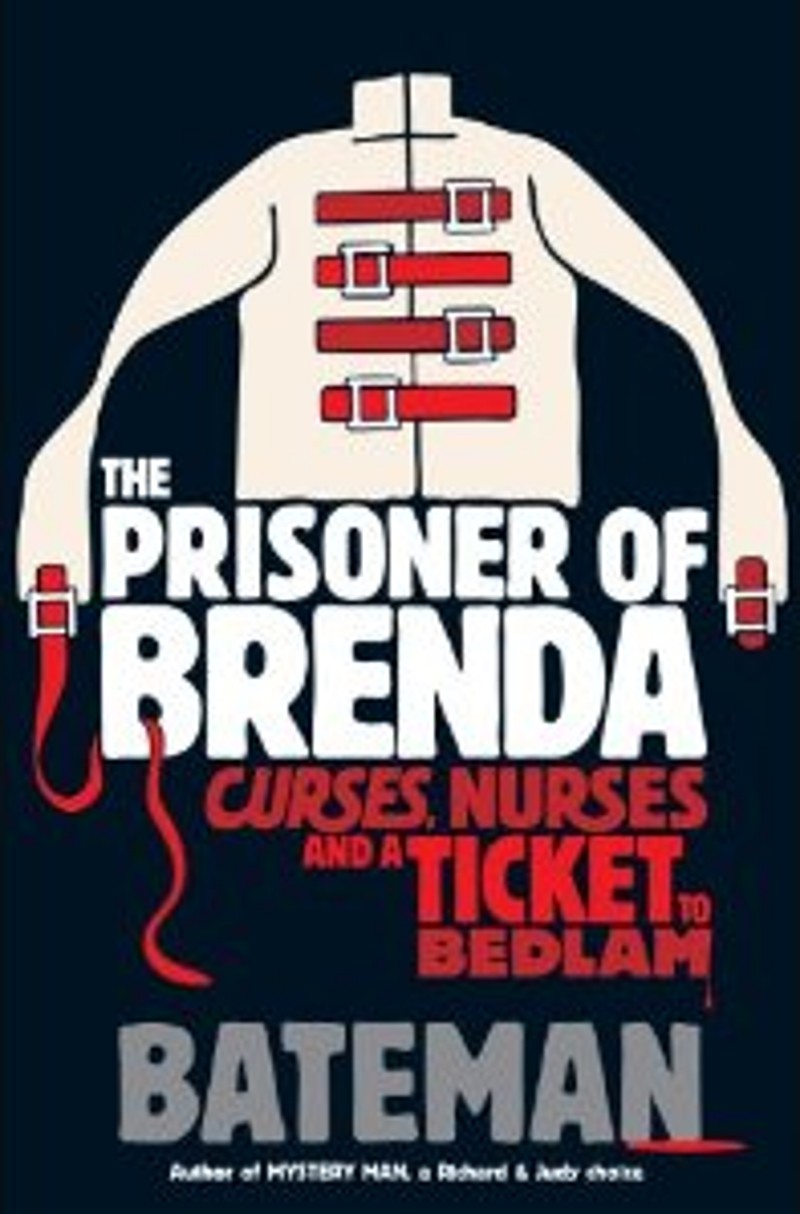
Nobody Move, This Is A Review: THE PRISONER OF BRENDA by Colin Bateman

The fourth of Colin Bateman’s ‘Mystery Man’ novels, THE PRISONER OF BRENDA (Headline), features for its protagonist an unnamed man who is the proprietor of No Alibis bookshop in Belfast and the most unlikely hero in crime fiction. A puny specimen, Mystery Man is a coward, a flake and a hypochondriac who suffers from brittle bones, and yet he finds himself dragged into solving mysteries time and again on the basis that he has read every crime and mystery novel worth reading, and thus understands the criminal mind to a degree that no other detective could.
  Here Mystery Man is approached by Nurse Brenda, a psychiatric nurse, to help out with establishing the identity of a man who has been incarcerated in Purdysburn mental hospital. Known only as ‘The Man in the White Suit’, the man has apparently suffered a nervous breakdown and refuses to speak, even though he has been accused of a brutal murder.
  Mystery Man, who was previously a patient of Nurse Brenda, takes on the case against the better judgement of his girlfriend, Alison, who fears that he will suffer a relapse and find himself being dragged off to Purdysburn. But Mystery Man has the scent of a good mystery in his nostrils - and besides, someone is prepared to pay him to investigate, which is very good news given that the book industry is dying on its knees.
  The Mystery Man novels are on one level a humorous spoof of the crime and mystery genre, or at least the more extreme and clichéd crime and mystery novels. Told in the first person, so that we have access to Mystery Man’s deluded ramblings as he goes about his investigation, they are a distant (and possibly addled) cousin of the Raymond Chandler / Dashiell Hammett private eye novels, with the added bonus of Mystery Man’s knowing commentary on his own actions as he explains the various clues and avenues of investigation.
  Of course, Colin Bateman is a veteran of 22 crime novels for adults at this point, so he wraps his apparently ham-fisted spoof of the mystery novel inside a cleverly constructed mystery narrative. All told, it’s terrific fun.

Monday, October 22, 2012

Normal Service Will Probably Not Be Resumed

Apologies to the Three Regular Readers, yet again, for how slack the service has become on Crime Always Pays. Right now my brain-space is being colonised by a couple of writing projects, one of which is a rewrite, the other a whole new book.
  I’m very wary of the rewrite, because at the moment I’m thinking that it won’t take a lot of work, more of a spit-and-polish job, and whenever I find myself thinking that way I tend to be very disappointed indeed, and up to my oxters in pulling the story apart and stapling it back together again. So there’s that.
  The whole new book, of course, is a terrifying prospect. It’s at times like this that I find myself glancing to the right of the desk, where a little shelf holds my previously published novels, and telling myself, ‘Well, you’ve obviously managed to write a book before. Just do what you did the last time.’ Except you forget what you did the last time. I think it’s a similar process to how the body has no physical memory of pain. Or maybe it’s because no two books are written the same way. It might help my case if I was writing a similar kind of book to the last one, or the one before that, but this book is something new for me (it’s a spy novel, of sorts). Matters aren’t helped by the fact that I haven’t written any fiction for about six months, so it feels like I’m emerging from hibernation - sluggish, stiff, yawning. And on top of all that, I have an either-or decision to make about the main character which will have huge ramifications on how the story is told, and I’m reluctant to dive into telling it in case I realise, 30,000 words later, that the other option would have been the better choice.
  And yes, I do appreciate how much that all sounds like procrastination. But due to other commitments, it does look like this new book will have to be written between the hours of 5am and 7am, as was the last, and I really don’t know if I have the physical stamina for that kind of regime.
  The flip side to that, of course, is that if I don’t do some proper writing in the very near future, I’ll end up a basket case and an absolute bear to live with. And that ain’t good, either.
  Anyway, that’s where I’m at, and why the service has been so slack. I’m off for most of this week, travelling to do the IWC Peregrine Readings in Waterford and Cork, but hopefully things will return to normal when I get back. If you don’t hear from me, just presume that I finally made that crucial decision and started the new book, and that the writing is going incredibly well. Or that I finally tumbled into the Pit of Despair. Bonne chance, mes braves …

Saturday, October 20, 2012

On Chandler, Proust And Spliff

I’ve had a busy old time of it lately, what with all the demands that I sprawl on couches the better to be fed grapes and ambrosia and nectar and whatnot, so I’ve been a little neglectful of SLAUGHTER’S HOUND (Liberties Press), which has been picking up some rather nice reviews over the last couple of weeks. To wit:
“Burke tells his darkly propulsive tale in a fine-tuned, staccato-like narrative voice … bleakly engaging.” - Sunday Business Post

“Tight, witty, sharp as a nail and stunning … SLAUGHTER’S HOUND is just an absolute pleasure to read.” - Ayo Onotade, Shots Magazine

“It’s not easy to bring something new to the private-eye novel but Declan Burke rises to the challenge with panache in SLAUGHTER’S HOUND … The book opens with what may well be the longest sentence in crime fiction — where Proust meets Chandler over a pint of Guinness, with a large spliff on the side. Burke is an author who takes risks, makes you laugh and writes like an angel with a devilish sense of humour.” - Andrew Taylor, The Spectator
  All of which is, as you might imagine, hugely satisfying to my insatiable ego.
Meanwhile, BOOKS TO DIE FOR, which I co-edited with John Connolly, has also been picking up some very nice reviews following its publication in the US, with the gist running thusly:
“An engaging, erudite and substantial anthology about the ‘world’s greatest mystery novels.’” - Milwaukee Journal Sentinel

“This volume is indispensable … an absolute must for everyone’s personal library.” - Book Reporter

“Delightful … it serves as both a primer on the evolution of the genre and an escort into its remoter corners.” - Kirkus Reviews

“A sumptuous exploration of some of the best mystery authors of our time that showcases their passion for writing and their heartfelt tributes to their fellow writers. It is a resource readers will want to keep for decades.” - Miami Herald
  I really am delighted to see that BTDF is being so well received, given that it was such a labour of love.
  In other news, I’ll be taking part in the Irish Writers’ Centre ‘Peregrine Readings’ series alongside Arlene Hunt this coming week, which should be a lot of fun. The dates and venues are as follows:
Tuesday 23rd October, Irish Writers’ Centre, Dublin, 7.30pm
Wednesday 24th October, Tramore Library, Co. Waterford, 7pm
Thursday 25th October, Triskel, Christchurch, Co. Cork, 8pm
  If you’re likely to be in the vicinity of any of those venues this week, I’d love to see you there …

Thursday, October 18, 2012

Sheer Geneius

I was absolutely delighted last night when word filtered through that Gene Kerrigan’s THE RAGE had won the Gold Dagger at the Crime Writers’ Association Awards. I thought it was a superb novel when I read it first, all those many moons ago, and I’m very pleased indeed to see it, and Gene, get the credit they deserve.
  Mind you, a certain Stuart Neville won’t be at all surprised. During the course of an interview waaaaaay back in April of 2011, I asked Stuart if he’d read anything recently that he’d like to recommend, and his response ran thusly:
“The new Gene Kerrigan book, THE RAGE, is absolutely terrific. It captures that sense of Ireland on the down-slope of the rollercoaster, he’s done that very, very well. But also, his journalistic background makes it seem like there’s almost a documentary feel to it. You feel like you could be reading an actual description of a crime in it, as opposed to a fictional crime. It has a real core of authenticity to it. It’s very impressive. I’d hope that the Irish Book Awards win last year, and the CWA nomination, will help raise his profile. He’s a terrific writer.”
  Indeed he is. For the rest of the CWA Awards nominees and winners, by the way, clickety-click on the very fine blog It’s A Crime …

The Curious Case Of Wilkie Collins And The Dry Old Tart

Interviewing writers can be a bit of a tricky business these days. No longer is it good enough, apparently, to take five minutes beforehand to strategically dog-ear a few corners in their latest tome and then plonk it down on the table and ask them earnestly where they get all their wonderful ideas. These days, for some odd reason, writers expect you to have read at least one of their books before the interview commences, and preferably the current one. Strange, I know, but there it is.
  Anyway, I’m reading the latest Mystery Man offering from The Artist Formerly Known as Colin Bateman, aka THE PRISONER OF BRENDA (Headline, published October 25th), and very funny it is too, studded with some very nice digressions on the nature of crime fiction and not a few opinions on the quality of the books Mystery Man stocks in his crime fiction bookshop. To wit:
“He probably didn’t know that Sergeant Cuff was one of the first and greatest of fictional detectives, appearing in 1868 in Wilkie Collins’s THE MOONSTONE - a book, incidentally, hailed by Dorothy L. Sayers as probably the very finest detective story ever written. Dorothy was no slouch herself, if a bit of a dry old tart.” (pg 62)
  A pithy appraisal, I’m sure you’ll agree. And there’s plenty more where that came from, although fans of the Scandinavian crime novel may want to gird their metaphorical loins before cracking the spine …
Declan Burke has published a number of novels, the most recent of which is ABSOLUTE ZERO COOL. As a journalist and critic, he writes and broadcasts on books and film for a variety of media outlets, including the Irish Times, RTE, the Irish Examiner and the Sunday Independent. He has an unfortunate habit of speaking about himself in the third person. All views expressed here are his own and are very likely to be contrary.