Monday, June 6, 2011

Down These Green Streets And Into The Gutter

And so the big day approacheth. Tomorrow, June 7th, sees the official launch of DOWN THESE GREEN STREETS: IRISH CRIME WRITING IN THE 21st CENTURY, said launch taking place at the award-winning Gutter Bookshop, Temple Bar, Dublin, at 6pm. As all Three Regular Readers will be aware, DOWN THESE GREEN STREETS is a collection of essays, interviews and short stories by Irish crime authors addressing the phenomenon that is the quality and quantity of Irish crime writing that has emerged in the past decade or so.
  It goes without saying that all are welcome, and I’m hoping for a large turn-out, given that many of the contributors will be in attendance, including John Connolly, Tana French, Ken Bruen, Arlene Hunt, Declan Hughes, Gene Kerrigan, Alan Glynn, Alex Barclay, Eoin McNamee, Brian McGilloway, Niamh O’Connor, Jane Casey and Gerard Brennan, with Eoin Colfer proving gracious enough to agree to launch the tome on behalf of Liberties Press. I’ll be mooching around in the background too, but don’t let that put you off …
  It feels as if tomorrow has been a long time coming, and I’m sure the abiding feeling will be one of relief, given that it’s about three years or so since I first had the idea for GREEN STREETS. I’ll be proud of the book too, of course, but in an oddly dislocated way, I think: my name is on the cover, as editor, but there’s no doubt in my mind that the book belongs to the authors, and that the pride will stem from a delight in seeing a body of writers giving voice, in a range of diverse ways, to the very personal inspirations, compulsions and justifications for doing what they do. It’s hard to say how the book will be received, given that it’s something of a rattle-bag without any real precedent, but for now I’m just happy to see it on the shelf and take its place in the world.
  All the attending authors will be signing copies, by the way, with hardback and paperback editions available. Given the assembled talent, tomorrow evening represents a unique opportunity for crime fans to get their hands on a tome signed in multiple fashion by some of the best writers in the business. Oh, and there’ll be glasses of plonk too. How could you possible resist?
  For those keen to know more, I’ll be on The Last Word with Matt Cooper tomorrow evening, Tuesday, basking in the reflected glory of one John Connolly, who may be persuaded to contribute a few words to the discussion; and for early risers, I’ll be on TV on Wednesday morning, on TV3’s Ireland AM at 8.15am, shuffling nervously and hoping not to say anything too stupid in the company of Eoin McNamee.
  If you can’t make the launch, feel free to cross your fingers on our behalf. All good wishes gratefully accepted … And if you've a mind to order a copy, just clickety-click on the interweb lair of Liberties Press here ...

Sunday, June 5, 2011

Here Comes The Summer


And so we’re back, to a grey and dreary Irish summer. You very probably didn’t notice, but I was away for the last two weeks, on holidays in Northern Cyprus, and a terrific time was had by all. Good food, more-or-less constant sun, fabulous views from the terrace of splendid sunsets (sample pictured, above), plenty of reading time, and plenty of time too to spend with Mrs Lovely Wife and the Princess Lilyput. All told, it was a nigh-on perfect holiday in a place with a fabulously interesting recent history, more of which anon …
  In the meantime, it’s on with the job of this blog, which is to big-up good books for the discerning reader, one of which is the latest from Benjamin Black, A DEATH IN SUMMER. Black - aka John Banville - got the royal treatment in the Irish Times yesterday, with an excellent interview by Sara Keating dovetailing with a review of A DEATH IN SUMMER by John Boyne.
  I know there are crime readers out there who resist Benjamin Black on the basis that John Banville has in the past been - allegedly - snobbish about ‘slumming it’ when he writes crime fiction, but in my very limited experience, while interviewing Banville for the DOWN THESE GREEN STREETS collection, he was entirely candid about the notion that Banville and Black write two different kinds of books, one self-consciously literary, the other self-consciously genre. From yesterday’s interview:
“I suppose some of my John Banville books could have been written by Benjamin Black: THE BOOK OF EVIDENCE, maybe, THE UNTOUCHABLE, because they are to some extent crime books. I am not necessarily saying that one [type of book] is better than the other. They are just two different ways of writing.”
  Meanwhile, John Boyne had this to say in his review of A DEATH IN SUMMER:
“John Banville, a man for whom the term ‘serious literary figure’ might have been invented, often speaks of these books in a slightly offhand way, as if they were of less worth than his ‘Banville’ novels. This brings to mind Graham Greene, a writer who also divided his work into literary fiction and ‘entertainments’, although, when one considers that the entertainments included THE MINISTRY OF FEAR and OUR MAN IN HAVANA, one might think that Greene was doing himself a slight disservice.” - John Boyne
  Set in 1950’s Dublin, and featuring the amateur sleuth Quirke, the Benjamin Black novels have the outward appearance of sepia-tinged cosies. But - and without giving away too many spoilers - the ending of A DEATH IN SUMMER features the most hard-boiled, stomach-churning noir finale to any novel I’ve read this year, bar none.
  I’ve gone on record before to say that I’ll always enjoy the Banville novels more than the Black novels, but if A DEATH IN SUMMER is any indication of where Banville is going with the Black novels, I’m no longer sure that that’s the case. I certainly think that A DEATH IN SUMMER is worth the consideration of any serious crime fiction reader, and that it rewards a patient reading.

Wednesday, June 1, 2011

Nobody Move, This Is A Review: THE FATAL TOUCH by Conor Fitzgerald

Set in Rome, but featuring an American-born Italian police detective, and written by an Irishman, THE FATAL TOUCH is Conor Fitzgerald’s sequel to last year’s debut, THE DOGS OF ROME, which garnered him comparisons with the late Michael Dibdin, who along with Donna Leon had virtually cornered the market on English-language crime fiction set in Italy until his untimely death.
  ‘Conor Fitzgerald’, by the way, is a pseudonym for Conor Fitzgerald Deane; the author is the son of poet and academic, Seamus Deane. Intriguingly for a man who has previously translated Joycean academic work, Fitzgerald has given his protagonist the name Blume.
  Here Commissario Alec Blume investigates the murky world of art forgery, aided and abetted by his colleague Caterina Mattiola, former policeman Beppe Paolini, the mysterious Colonel Farinelli, and the memoirs left behind by a dead forger, the Irish artist-in-exile Henry Treacy.
  Beautifully written, the story proceeds at a stately pace which disguises an exquisitely complex plot, as Blume delicately negotiates the labyrinth that is Roman policing. Fitzgerald has an elegant, spare style that straddles both the literary and crime genres, and the style is perfectly pitched to reflect Blume’s own world-weariness.
  Despite his cynicism, however, one of Blume’s chief virtues is his laconic sense of humour, which gives rise to deliciously dry and deadpan observations on virtually every page, most of them at Blume’s own expense.
  Blume is a loner, an outsider and a potential alcoholic, but Fitzgerald cleverly reworks the police procedural’s conventions, much as the forger Treacy pays homage to the Old Masters, and makes a distinctive hero of Blume, particularly in terms of his ability to not only adjust to the corruption that is integral to Italian policing, but to employ it on his own terms. This is a particularly clever twist, as the world is fully aware that corruption is endemic to Italian public life, but this is the first time I’ve come across a character proactively employing corruption as a policing tool.
  Meanwhile, Treacy’s memoirs provide a secondary narrative strand that is equally compelling, and which neatly feed into the main story despite Treacy’s penchant for baroque and self-serving prose. Treacy’s journals, of which there are extensive excerpts, put me in mind of John Banville’s THE BOOK OF EVIDENCE, had Freddie Montgomery turned to art forgery rather than murder.
  The character of Colonel Farinelli is also an intriguing one. A corpulent sybarite, he carries a whiff of cordite wherever he goes. Formerly a powerful policeman, he has long since been shunted out of the corridors of power, due to a murky past in which he was involved, unsuccessfully, in attempting to secure the release of former Italian prime minister Aldo Moro, who was abducted and subsequently murdered by the Red Brigade in 1978.
  All these elements come together in a scintillating novel which offers a compelling snapshot of contemporary Rome, courtesy of a guide, in Alec Blume, who seems set fair to become this generation’s Aurelio Zen. - Declan Burke

  Conor Fitzgerald’s THE FATAL TOUCH is published by Bloomsbury.

This World Is Mostly Broken

Tana French (right) is having a hell of a year. We’re still not halfway through, and already she’s been nominated for an LA Times Book Award, an Edgar and an Anthony, all for FAITHFUL PLACE. Nice work, with her latest offering, BROKEN HARBOUR, to come in August.
  Tana, of course, makes a virtue of pulling a minor character from a previous novel into the spotlight with her latest, and BROKEN HARBOUR will follow in the stumbling footsteps of ‘Scorcher’ Kennedy, who played a supporting role in FAITHFUL PLACE. So wot’s BROKEN HARBOUR all about then? Quoth Tana, from her contribution to DOWN THESE GREEN STREETS:
“It’s set somewhere out past Balbriggan [north County Dublin], on one of those half-built ‘ghost estates’, one of the quarter-inhabited ones. A family has been attacked and the father and two children are dead, the mother’s in intensive care and Scorcher, who is still not one hundred per cent back in everyone’s good books after making a mess of the case in FAITHFUL PLACE, has been assigned this case with his rookie partner. And of course, it ends up getting tangled up with Scorcher’s own personal life because Scorcher’s got a history with this location in this previous incarnation – before it was an estate, it was a place where people went on their summer holidays. He’s got a bit of history there and what with that and everything else, the case sucks him in.”
  So there you have it: another slice of thoughtful social commentary wrapped up in beautiful prose which excavates the dark secrets of a psychologically complex anti-hero as a metaphor for a broken country. Easy when you know how, eh?

Monday, May 30, 2011

“Ya Wanna Do It Here Or Down The Station, Punk?”: Charlie Stella

Yep, it’s rubber-hose time, folks: a rapid-fire Q&A for those shifty-looking usual suspects ...

What crime novel would you most like to have written?
THE FRIENDS OF EDDIE COYLE by George V Higgins.

What fictional character would you most like to have been?
The supposedly well-hung Santino Corleone.

Who do you read for guilty pleasures?
If only Glee were a book ...

Most satisfying writing moment?
First sale.

The best Irish crime novel is …?
Ken Bruen’s THE DRAMATIST.

What Irish crime novel would make a great movie?
The same (DRAMATIST).

Worst / best thing about being a writer?
Worst = money.
Best = fans (all 16 of them).

The pitch for your next book is …?
A retired organized crime cop drops his wife off at an arts and crafts weeklong program on an island off the coast of New England (Star Island, where I’m doing my MFA actually) and spots someone he knows is in the witness protection program. The retired cop is unhappy at home and thinking maybe he should sell the rat back to the mob and enjoy his last few years on planet earth with gusto.

Who are you reading right now?
David Carroll, ALBERT CAMUS THE ALGERIAN

God appears and says you can only write OR read. Which would it be?
Read.

The three best words to describe your own writing are …?
Honest, humorous, ugly.

Charlie Stella’s JOHNNY PORNO is published by Stark House.

Tangled Up In BLUE

The paperback of Eoin McNamee’s ORCHID BLUE has finally arrived, and a very handsome piece of work it is too. It also features, and for the very first time to the best of my knowledge, a pull quote from one of my reviews on the back cover, during the course of which I described ORCHID BLUE as ‘A stunning meditation on the nature of justice’ (Irish Times, Top Ten Thrillers 2010).
  Chuffed? Yes, and particularly because ORCHID BLUE is a superb novel from one of Ireland’s finest living novelists. It raises more questions than it answers, as all the great novels do; in fact, I’m very tempted to open it once more, and get tangled up in its haunting web of lies all over again.
  I reviewed the novel at length late last year, and found myself writing this kind of thing:
McNamee has described the noir novel as a very ‘Calvinist’ kind of storytelling, with its undertones of implacable fate and predestination. What hope is there for a person if he or she has been fingered by Fate before they’re even born? And what hope if the ultimate arbiter of justice - God, for the most part, although McNamee’s arbiter of justice in ORCHID BLUE is Justice Lance Curran - is already prejudiced against the person in the dock?
  For the full review, clickety-click here …
  I also got to interview Eoin, last November, in which he waxed lyrical about the ethics (or otherwise) of writing novel-length fictions based on true-life crimes. To wit:
“You’re always walking a moral tightrope,” he agrees, “to a certain extent. Looking back it seems quite easy, the story is what it is. But when you start talking about historical fact, you’re not really talking about the facts at all, you’re talking about the historical record. And that’s a different thing entirely to what the facts were.
  “So you are making judgements all the time, asking yourself where you should take it, wondering if you’ve taken it over the line. But it’s an artistic line you don’t want to cross, if I can put it that way. If you get it wrong in the moral sense, then you get it wrong. But I’m a writer, not a priest. And as a writer, you answer to the god of fiction.”
  For the full interview, clickety-click here …
  Incidentally, Eoin’s contribution to DOWN THESE GREEN STREETS is a very fine essay called ‘The Judge’, in which he explores his personal take on the historical and moral backdrop to ORCHID BLUE, and the murder of Pearl Gamble. In my humble opinion, it’s a piece of writing about crime fiction that’s worth the price of admission alone. The book will be officially launched on June 7th in the Gutter Bookshop, Dublin, with a further launch in No Alibis, Belfast, on June 18th, with the bulk of the contributing authors appearing at both launches. If you fancy a sneak peek at GREEN STREETS prior to that, just clickety-click here …

Sunday, May 29, 2011

We Love Lucy

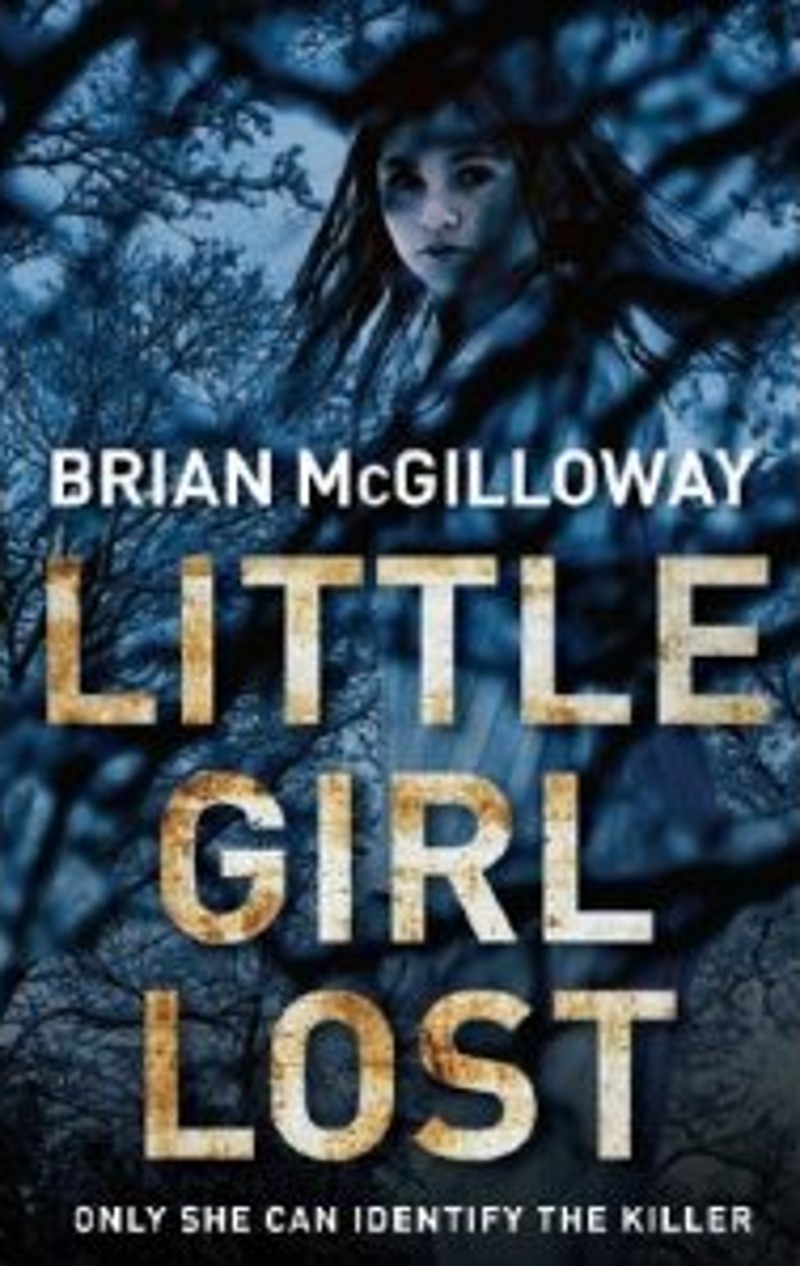
The Ireland AM programme over on TV3 has been very supportive of Irish crime writers over the last few years, even going so far as to sponsor the Crime Fiction gong at the annual Irish Book Awards bunfight. Brian McGilloway was on the couch recently, talking about his latest offering, LITTLE GIRL LOST - which is terrific, by the way - and discussing the challenge of switching horses midstream, particularly when you’ve established a critically acclaimed series character like Ben Devlin, to write a standalone. The good news is that it sounds as if there’ll be more to come from DS Lucy Black, the heroine of LITTLE GIRL LOST who dabbles in the Freudian darkness of fairytales, even if Brian is currently working on a brand new Devlin. Mr McGilloway, with these very fine novels you are surely spoiling us …
  For the six-minute interview, clickety-click here …
  Meanwhile, and staying with Ireland AM, the programme has been kind enough to invite Eoin McNamee and yours truly onto the couch on Wednesday morning, June 8th, to chat about our mutual love of horoscopes, unicorns and toe jewellery. I can’t speak for Eoin, but I’ll be doing my damnedest to shoehorn in a mention of DOWN THESE GREEN STREETS, which launches the night before in the award-winning Gutter Bookshop, Temple Bar, Dublin, where all will be made very welcome indeed. As it stands, the authors attending include John Connolly, Arlene Hunt, Tana French, Eoin McNamee, Alan Glynn, Declan Hughes, Gene Kerrigan, Jane Casey, Kevin McCarthy and Niamh O’Connor, an array of talent so stellar that the Gutter Bookshop may well develop its own gravity and collapse into a black hole, thus wiping out an entire generation of Irish crime writers in one fell swoop, and leaving the field free for yours truly, who will have nipped outside for a crafty smoke just as gravity starts to suck them all in. A cunning plan? I like to think so …
Declan Burke has published a number of novels, the most recent of which is ABSOLUTE ZERO COOL. As a journalist and critic, he writes and broadcasts on books and film for a variety of media outlets, including the Irish Times, RTE, the Irish Examiner and the Sunday Independent. He has an unfortunate habit of speaking about himself in the third person. All views expressed here are his own and are very likely to be contrary.