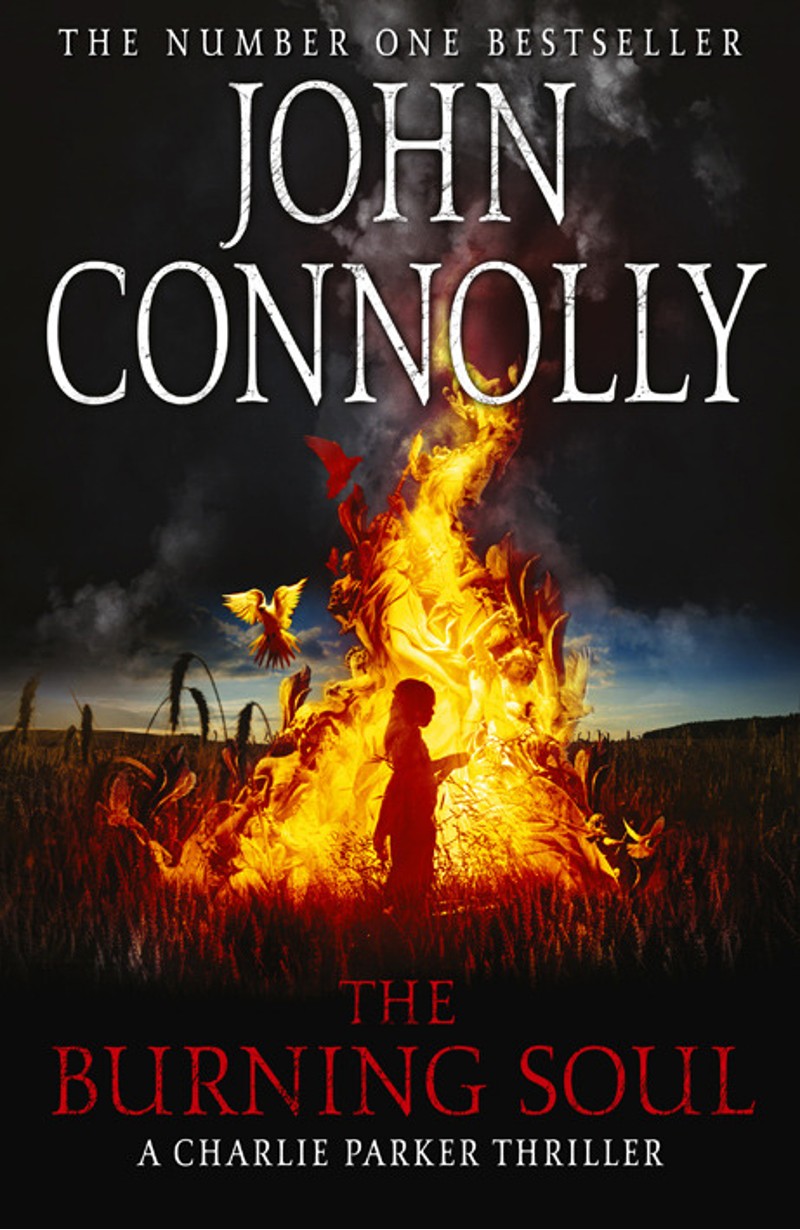
I’ve been more than a bit baffled over the last few years about the fact that John Connolly never seems to be nominated for the plethora of crime fiction awards. I wouldn’t mind so much if Connolly had, like so many successful authors before him, hit a plateau in terms of ability and ambition and was simply churning out the same book year after year. Anyone who has read his last two novels in particular, however, will testify that this is not the case; indeed, I’d argue that John Connolly is now writing the best fiction of his career. THE BURNING SOUL, especially, struck me as a very special novel, so I’m delighted to see that it has been recognised as such, and long-listed for the ‘Theakstons Old Peculier Crime Novel of the Year (a much-coveted title, despite (cue pedantic harrumph) the criminal absence of an apostrophe in the title of a writing competition. If you tolerate this, then your children will be unpunctuated, etc.
I’m equally delighted to see that Stuart Neville has also been nominated for said prize, for COLLUSION, which is to my mind the finest of his three novels to date, notwithstanding the fact that everyone else seems to prefer his debut, THE GHOSTS OF BELFAST (aka THE TWELVE). COLLUSION has previously been nominated for the LA Times Crime / Mystery Novel of the Year, an award Neville won with THE GHOSTS OF BELFAST, so the book has pedigree in this kind of thing.
Either book has a very strong claim to actually winning the prize, although they’ll have to survive the shortlist cull first, which takes place on July 5th, I think; but they’re up against some very strong opposition, including novels from Val McDermid, Robert Harris, Denise Mina and Ian Rankin, not to mention last year’s most wildly overrated crime novel, BEFORE I GO TO SLEEP by SJ Watson.
For the full long-list line-up, clickety-click on the venerable It’s A Crime (or a Mystery) …
Showing posts with label Stuart Neville Collusion. Show all posts
Friday, May 18, 2012
Wednesday, November 24, 2010
The North Will Rise Again, Again
Apologies to all Three Regular Readers for the intemperate outburst regarding Irish politics yesterday, a post I had to take down on the basis that it was attracting all kinds of bizarre comments, most of them even more radical in terms of visiting violence on Irish politicians than my own. Normal service is hereby resumed …I’ve mentioned Eoin McNamee’s ORCHID BLUE on these pages more than once in the last few weeks, but it really is a terrific read. If you don’t believe me, check out John Burnside’s review in The Guardian last week. The gist runneth thusly:
“Northern Ireland, 1961. The body of a young woman, stripped naked, brutally beaten, stabbed and finally strangled, is discovered in a stubble field after a dance at Newry Orange Hall. Though the police have nothing to go on other than the most circumstantial evidence, the whole town agrees that the killer is a young bodybuilder and ne'er-do-well named Robert McGladdery …Nice. Meanwhile, I was delighted to see Stuart Neville’s very fine COLLUSION reviewed by Marilyn Stasio in the New York Times at the weekend, although it has to be said, it was less of a review and more of a synopsis.
“It is this sense of how the defining moments come to be agreed – of how they are essentially defined by the ruling class – that illuminates ORCHID BLUE, so that what begins as a crime thriller gradually builds not only into a political novel of the highest order but also that rare phenomenon, a genuinely tragic work of art.” - John Burnside
To wit: The violence in Stuart Neville’s novels about Northern Ireland is about as nasty as it gets in noir crime fiction. But while the bloodshed in Neville’s first novel, THE GHOSTS OF BELFAST, was viewed from the perspective of a professional killer named Gerry Fegan, in COLLUSION (Soho, $25), a law enforcement officer is drawn into the brutality, which only adds to the sense of despair. Detective Inspector Jack Lennon, a Belfast policeman with an unsavory past, has a chance to redeem himself by coddling an informant with intelligence on local gangsters doing business with a Lithuanian mob. But in the process Lennon learns of more serious criminal collusion involving “the cops, the Brits, the Irish government, the party” — not to mention the mob bosses.Now, I’m sure Stuart Neville isn’t exactly complaining, but I was left scratching my head as to the point of a ‘review’ like that. Maybe I’m being obtuse, but if I hadn’t read the novel, I’d be no wiser as to if it was actually any good, and if so, why. Which is the point, is it not, of a review?
This corruption can be traced all the way back to the Troubles and to one particular bloodbath that made fugitives of Lennon’s estranged lover and daughter. In his frantic efforts to find them, the detective turns to Fegan, the assassin, who is his only hope of finding out why that old atrocity is being revisited. What he doesn’t hold out any hope for is an end to the cycle of violence — not in Northern Ireland, where even today, in the midst of peace, organized crime is relentlessly intruding. - Marilyn Stasio
Subscribe to:
Posts (Atom)
Declan Burke has published a number of novels, the most recent of which is ABSOLUTE ZERO COOL. As a journalist and critic, he writes and broadcasts on books and film for a variety of media outlets, including the Irish Times, RTE, the Irish Examiner and the Sunday Independent. He has an unfortunate habit of speaking about himself in the third person. All views expressed here are his own and are very likely to be contrary.

