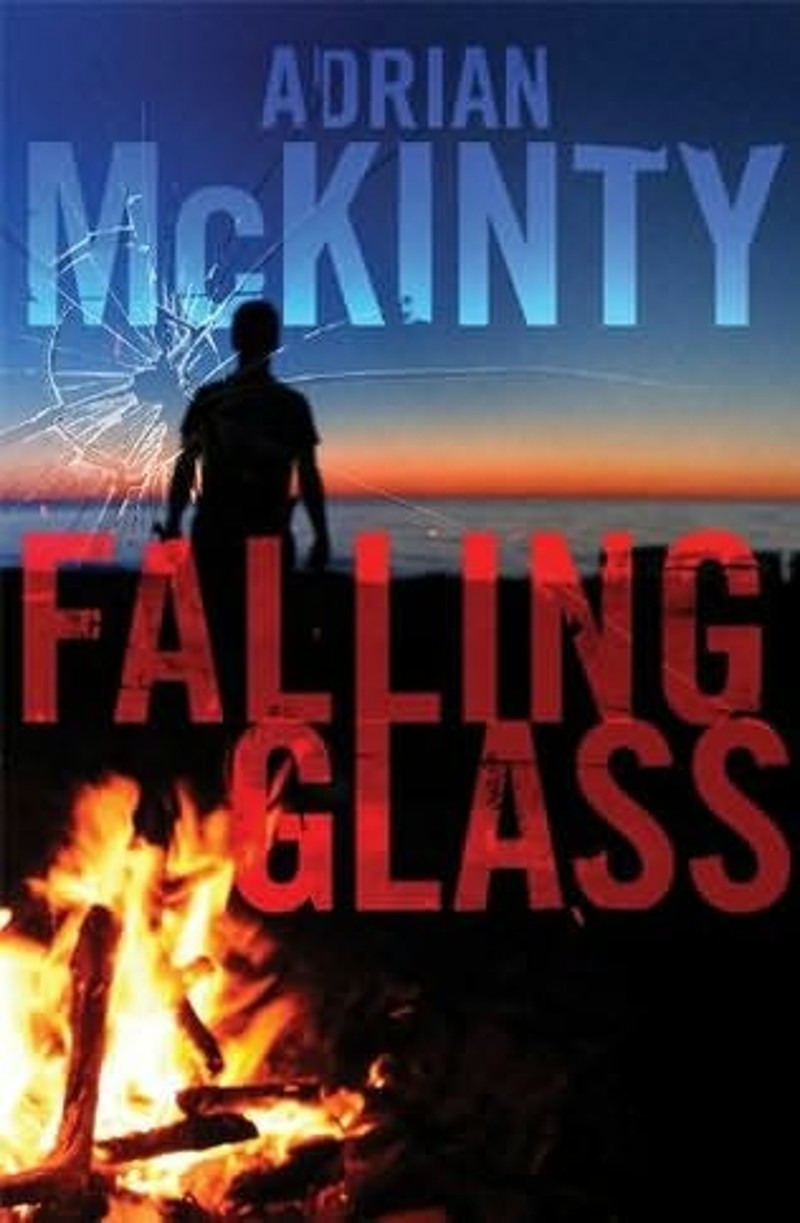
Showing posts with label Falling Glass. Show all posts

Tuesday, December 20, 2011

CAPNYA: Or, The Crime Always Pays Novel of the Year Award!

A trumpet-parp please, maestro. The votes are in, the counts have been tallied, the hanging chads ignored, and the winner emerges triumphant. The short-list consisted of THE BURNING SOUL by John Connolly, THE RAGE by Gene Kerrigan and FALLING GLASS by Adrian McKinty, and - ta-da! - it’s FALLING GLASS that wins the hardly-coveted-at-all Crime Always Pays Novel of the Year Award!
  Now all I need to do is come up with some kind of trophy to mark the occasion. Meanwhile, it’s a hearty congrats to Adrian McKinty, not least, as I’ve said before, because 2011 was yet another very fine year for Irish crime writing. Incidentally, FALLING GLASS has already secured the significantly-more-coveted Audible.com Best Mystery / Thriller of the Year. Which just goes to prove that the readers of this blog, if not its host, have impeccably good taste …
  I wouldn’t be in the least bit surprised, by the way, if McKinty’s forthcoming tome, THE COLD COLD GROUND, doesn’t feature on a number of 2012’s Best Of lists. It’s due in January, and I’ve already gone on the record about it on these pages, with the gist running thusly:
“The hunger strikes mark the bleakest period of Northern Ireland’s ‘Troubles’, and it’s entirely fitting that Adrian McKinty should be the writer to plunge into that darkest of hearts. It’s a rare author who can write so beautifully about such a poisonous atmosphere, but McKinty’s prose is a master-class in vicious poise as he explores the apparent contradictions that underpin Ulster’s self-loathing. Be in no doubt that this novel is a masterpiece: had David Peace, Eoin McNamee and Brian Moore sat down to brew up the great ‘Troubles’ novel, they would have been very pleased indeed to have written THE COLD COLD GROUND.”
  Very pleased I was, not to mention a little gobsmacked, to see a line from that little lot quoted on the back cover blurb of THE COLD COLD GROUND when it fell through my letterbox last Monday morning. But don’t take my word for it. The various blurbs also feature Stuart Neville (“A razor-sharp thriller with style, courage and dark-as-night wit … brilliant”) and Brian McGilloway (“A brilliant piece of work which does for Northern Ireland what [David] Peace’s Red Riding Quartet did for Yorkshire”).
  So there you have it. THE COLD COLD GROUND by Adrian McKinty. Don’t say you haven’t been warned …
  As for my own favourite novels of the year, well, 2011 was a year in which I was fairly spoiled. They are, in roughly the order I read them:
THE TERROR OF LIVING by Urban Waite;
CROOKED LETTER, CROOKED LETTER by Tom Franklin;
THE GLASS RAINBOW by James Lee Burke;
CITY OF THE DEAD by Sara Gran;
THE TROUBLED MAN by Henning Mankell;
THE FATAL TOUCH by Conor Fitzgerald;
THE DEVOTION OF SUSPECT X by Keigo Higashino;
THE CALLER by Karin Fossum;
FALLING GLASS by Adrian McKinty;
THE WATCHERS by Jon Steele;
LASTING DAMAGE by Sophie Hannah;
BLOODLAND by Alan Glynn;
THE BURNING SOUL by John Connolly;
THE END OF EVERYTHING by Megan Abbott;
A SINGLE SHOT by Matthew F. Jones;
DADDY’S GIRL by Margie Orford;
  Winnowing those down for the purpose of picking my overall favourite, I find myself stuck on three titles:
CROOKED LETTER, CROOKED LETTER by Tom Franklin;
THE BURNING SOUL by John Connolly;
THE END OF EVERYTHING by Megan Abbott;
  Trust me, on this much at least: blow your book token vouchers on those three titles, and you won’t be disappointed.
  Finally, it’s over to you, dear reader. What was your favourite crime title of the year? The comment box is now open …

Monday, December 12, 2011

Stop The Press! ’Tis The CAPNYA Short-List …

And so to the short-list for the less-than-coveted Crime Always Pays Novel of the Year Award - or CAPNYA, if you prefer. I ran a proposed long-list a week or so ago, and with the votes in (it was a very low voter turn-out, incidentally; I blame the weather), only three titles received more than one vote. So it makes sense, I guess, to make those three titles the short-list. And so - a trumpet-blast please, maestro - they are:
THE BURNING SOUL by John Connolly;
FALLING GLASS by Adrian McKinty;
THE RAGE by Gene Kerrigan.
  Bearing in mind that there’s nothing remotely scientific about the polling method, and that the voting will be necessarily skewed by the fact that I’ve mentioned my own personal favourites here on CAP more often than others on the long-list, it’s interesting (to me, at least) that none of those three titles made the short-list for the Irish Book Awards’ crime fiction gong.
  It’s also worth saying that all three are terrific novels, and well worth winning an award in any given year, regardless of the competition.
  Anyway, on to the business end. Please feel free to vote for any of those three titles as the best Irish crime novel of 2011, via the comment box below. Oh, and if you don’t, I’ll come over all Brussels on your collective ass and start imposing my own verdict on the democratic process. Don’t say you haven’t been warned …

Thursday, December 8, 2011

On Small But Perfectly Formed Readerships

I mentioned last month that Adrian McKinty’s very fine novel THE COLD COLD GROUND is coming your way in January, but there’s also some excellent news about his 2011 offering, FALLING GLASS. For lo! Audible.com has picked FALLING GLASS as its Best Mystery / Thriller of the Year. Nice one, my son.
  Naturally, the award has sent McKinty into a dizzying downward spiral of self-examination over at his blog, wherein he talks about the titanic effort required to write novels when the world at large, for the most part, doesn’t seem to care. He then goes on to say this:
“But maybe the struggle is the point. I bet if I put my mind to it I could write a knock-off Michael Connelly or Lee Child and make boatloads of cash. But I don’t want to. I’m not that much of a cynic and books are too important to me. I don’t want to write for money or for the whims of editors in corner offices, I want to write the books that move me and make me think and make me excited. My readers get invested not just in the characters and the story but also in the words and sentences that make up the story. My readers like irony and judicial profanity. My readers like a good joke and a well turned phrase. My readers admire wit. My readers know who Seamus Heaney is. My readers DON’T HAVE TO HAVE EVERY LAST THING EXPLAINED TO THEM. My readers aren’t prudes. My readers don’t have to be told why its wrong to pour a shamrock on the head of a pint of Guinness. My readers can spot the gag in the sentence that begins chapter 2 of FALLING GLASS. My readers can recite poems from memory. My readers aren’t frightened by a page without dialogue. My readers can name the Presidents back to 1932. My readers are sometimes poleaxed but seldom banjaxed. My readers are a select group and, you know what, I’m really glad about that. Slainte.”
  God bless you, sir, and long may you run.

Sunday, August 28, 2011

Nobody Move, This Is A Review: Adrian McKinty, Benjamin Black, Niamh O’Connor

Some reviews for your delectation, O Three Regular Readers, the first batch of which were published in the Sunday Independent earlier this month, and which concentrate on Irish crime offerings. First up, Adrian McKinty’s FALLING GLASS. To wit:
FALLING GLASS is Adrian McKinty’s sixth offering, a thriller in which an underworld enforcer, Killian, is commissioned to track down Rachel, the ex-wife of a wealthy Northern Ireland businessman, who has absconded with his two daughters. Naturally, things do not go smoothly for Killian, for the most part because a ruthless killer, a Russian soldier and veteran of the brutal conflict in Chechnya, is also on the woman’s trail. Framed by an increasingly violent game of one-upmanship, the story hurtles down the tortuously twisting byways of rural Northern Ireland.

  However, a number of elements set FALLING GLASS apart from conventional shoot-’em-up thrillers. McKinty has established himself as a writer who blends riveting plots, a muscular kind of poetry and blackly comic flourishes, investing his fully rounded characters with thoughtful insights that frequently veer off at tangents into something akin to philosophy …
  For the rest, which includes reviews of Benjamin Black’s ELEGY FOR APRIL and Niamh O’Connor’s TAKEN, clickety-click here …

  Elsewhere, the Irish Times published the latest ‘Crime Time’ round-up of new titles two weeks ago, said column containing reviews of the latest offerings from Lynda La Plante, Karin Fossum, John Hart, Stella Rimington and Charles Cumming. I particularly liked Karin Fossum’s THE CALLER and Charles Cumming’s THE TRINITY SIX, with the latter review coming in the wake of the Stella Rimington, and kicking off thusly:
More deserving of the Le CarrĂ© comparisons is Charles Cumming’s fifth novel, THE TRINITY SIX. As a young man, Cumming was recruited by MI6, and his experience working for the Secret Intelligence Service is so palpable here that Cumming can at one point even afford to allow his hero, Dr Sam Gaddis, to wander into post-modern territory near the Ferris wheel made famous by Orson Welles in the classic movie ‘The Third Man’ ...
  It’d been years since I’d read a good old-fashioned spy thriller, and THE TRINITY SIX reminded me of how much I used to love them. Good timing, too, with the film adaptation of TINKER, TAILOR, SOLDIER, SPY on the way in the next couple of weeks. Anyway, for the rest of the Irish Times column, clickety-click here …

  Meanwhile, if anyone can point me in the direction of some good contemporary spy thrillers, I’d be very grateful indeed …

Saturday, August 13, 2011

You, Me And Ireland’s Answer To James Ellroy

Recently described as ‘Ireland’s more accessible answer to James Ellroy’ by Laura Wilson at The Guardian, Adrian McKinty (right) makes a rare appearance on these shores next Thursday evening at the No Alibis bookstore in Belfast. To wit:
No Alibis are very pleased to invite you to celebrate the launch of Declan Burke’s latest novel, ABSOLUTE ZERO COOL, and FALLING GLASS, the latest novel from Adrian McKinty, in the shop on Thursday 18th August at 6:00 PM.
  Adrian McKinty, as all Three Regular Readers will be well aware, is a firm favourite on these pages, mainly because he has a very good habit of writing very good books. The latest is FALLING GLASS, which I reviewed recently on Crime Always Pays; his previous offering, FIFTY GRAND, was longlisted earlier this summer for the Theakston’s Old Peculier Crime Novel of the Year. In short, the man is a terrific writer, and given that he currently resides on the other side of the planet, the No Alibis gig is a welcome opportunity to hear him read in person.

  Doing his manly best to play Falstaff to McKinty’s Prince Hal will be yours truly, and delighted and humbled I most certainly am to be invited to the hallowed halls of No Alibis to celebrate the launch of ABSOLUTE ZERO COOL. David Torrans, the legendary and possibly even semi-mythic owner of No Alibis, was good enough to micro-manage the Northern Ireland launch of DOWN THESE GREEN STREETS a couple of months ago, this in conjunction with the Belfast Literary Festival. A terrific evening it was, too, not least because I got to meet David Peace, although the one disappointment for me was that the event wasn’t actually held in No Alibis. I’d twice stood outside a closed No Alibis prior to that evening, not unlike a book-nerd Charlie Bucket in Willy Wonka and the Chocolate Factory, pretty much pawing at the glass frontage and drooling at the very fine offerings within. On the evening of the GREEN STREETS launch, I finally got to step inside the door; a very pleasant experience, even if we were all very quickly whisked away to the GREEN STREETS event.

  Anyway, it’ll be nice to actually do a gig at No Alibis. There’s a rites-of-passage aspect to it, or a kind of anointing; you’re no one, really, in this Irish crime writing game until your weedy voice has strained for profundity under the No Alibis rafters. The fact that it’ll happen in the company of Adrian McKinty isn’t so much a bonus as a gift.

  Tickets are free, by the way, and all the booking details can be found here …

Tuesday, June 21, 2011

Official: Adrian McKinty, Deviant

It’s hardly a week since I mentioned Adrian McKinty and his latest offering FALLING GLASS on these pages, so I hope you’ll forgive me for dredging up his name again so soon. The reason why is his next offering, DEVIANT, which at first, given the brutal honesty of the title, I presumed would be a warts-‘n’-all autobiography. But stay! DEVIANT is in fact McKinty’s latest young adult title, with the blurb elves wibbling thusly:
Danny Lopez is new in town. He made a mistake back home in Las Vegas, and now he has landed at an experimental school in Colorado for “tough cases.” At the Cobalt Charter School, everything is scripted—what the teachers say, what the students reply—and no other speaking is allowed. This super-controlled environment gives kids a second chance to make something of themselves. But with few freedoms, the students become sitting ducks for a killer determined to “clean up” Colorado Springs.
  Sounds like a belter, with McKinty himself describing it as ‘young adult noir (if such a genre exists’). Well, it does now; and it’s a rare young adult who doesn’t, in their blissful ignorance, consider themselves deviant in some shape or fashion. I certainly did. Anyway, we’ll leave it up to CAP’s semi-resident YA expert, aka Ms Witch, to tell us if it’s any good or not, but I’m certainly looking forward to delving into its deviance. Cracking cover, too.
  I like the theory, by the way. Snag ’em young, get ’em hooked on the spiritual crack of noir-styled misery and predestination, and you’re set for life. As for the kids, well, tough. I blame the parents. Do you know what your child is reading right now?

Monday, June 13, 2011

Through Falling Glass, Darkly

It’s a personal thing, but reading an Adrian McKinty novel depresses the hell out of me these days. The latest offering, which I’m getting to a little late, is FALLING GLASS, which I read on holidays a couple of weeks ago. It’s a story about Killian, an enforcer and debt collector who takes on a well-paying job to find Rachel, the former wife of a wealthy Northern Ireland businessman, who has absconded with his two children. Naturally, things do not go swimmingly for Killian, in part because the woman has very good reasons for going on the run, but also because another man, a Russian veteran of the Chechen conflict, is also tracking her down. What gives the novel its heft, and sets it apart from a conventional chase-and-shoot narrative, is the fact that Killian is of Pavee origin, Pavees being an indigenous Irish minority also known as tinkers, itinerants and Travellers. They are not, Killian tells us, gypsies; the Pavee are a branch of the European Roma, and a people whose roots are buried deep in Irish history, despite their nomadic way of life.
  McKinty is a very fine writer, as many have pointed out before (he is currently on the longlist for the Theakston’s Old Peculier Crime Novel of the Year for his previous offering, FIFTY GRAND), and he invests his hardboiled prose with a muscular poetry that lends itself to deliciously black humour (Chapter Six opens with the memorable line, “The place stank of dead Mexicans and no one was even dead yet.” (pg 91)). All of which would have made for an excellent crime novel, and the Pavee’s nomadic lifestyle provides a neat backdrop for Killian’s peripatetic wanderings; but as always with McKinty, there’s more: his novels are as much novels of ideas as they are page-turning thrillers, and here he provides a rare insight into the world of the Pavee, its traditions, mythologies and language. Moreover, Killian is a man striving to settle down, to leave behind both the wanderings of the Pavee and the world of crime. To this end he is currently studying at an Ulster university, studying architecture to be precise, a perverse choice for a man who was reared on the promise of the open road:
This is why we shrink from people. We Pavee. Why we don’t want their talk. Their hypocrisy and lies. We don’t want them breathing near us. Humans were never meant to be this close to one another. We weren’t meant to be in buildings. Architecture is based on a gigantic lie. Cities. We huddle for security, closer and closer until, like now, we are on top of one another. Stuck in these glass and steel and brick structures with all these other confused, unhappy people. (pg 206)
  Neatly juxtaposing Killian’s pursuit of Rachel with his internal journey towards some kind of rapprochement between his conflicting instincts, building tension all the while, FALLING GLASS is easily one of the finest novels of the year to date. That in itself is depressing, because as a writer, reading a great novel always serves to remind you of how far you have to travel yourself; but what’s truly depressing is that McKinty, despite being something of a byword for quality and class among a select group of aficionados, is nowhere as well known as most of his peers on the Theakston’s list, for example. I’ve long maintained that the fact that McKinty isn’t as recognisable a name, nor as bestselling, as the likes of Lee Child, Val McDermid or Mark Billingham, say, is proof positive that the current model of publishing is a joke, and not a particularly funny one.
  All of which aside, and taking it on its own merits, FALLING GLASS is a superb crime novel with a fascinating backdrop, the kind of page-turner that makes you want to stay your hand even as it reaches to turn the page. It should be Adrian McKinty’s break-out novel; but then, all of his novels should have been break-out novels. It’s a variation on the theme of no good deed goes unpunished, certainly, but exactly what is it about a body of work of consistent excellence that deserves the cold shoulder from the reading world at large?

Sunday, May 1, 2011

Down These Green Streets: Adrian McKinty on Flann O’Brien

As all Three Regular Readers will be aware, DOWN THESE GREEN STREETS: IRISH CRIME WRITING IN THE 21st CENTURY will be published later this month by Liberties Press, with yours truly responsible, in my role as editor, for all gaffes therein. Inspired by Stuart Neville’s big-up of Gene Kerrigan’s latest novel during the week, I thought it might be a nice idea to ask some of the GREEN STREETS contributors to nominate their favourite Irish crime novel. First up, Adrian McKinty on Flann O’Brien’s comic masterpiece, THE THIRD POLICEMAN:
“Like Samuel Beckett, Oscar Wilde and Seamus Heaney, Flann O’Brien spent his formative years in the bleak, rainy moorland of western Ulster. Someday a Ph.D. student will write a thesis explaining how this dour, sodden, landscape helped produce four of Ireland’s best and wittiest writers but the mystery need not detain us - anyone who has ever tried to coax directions out of a County Tyrone farmer will understand why west Ulster humour is necessarily dark, laconic, labyrinthine and filled with irony.
  “Beckett and Wilde were at the Portora Royal School in Enniskillen but O’Brien, like Heaney, was of humbler stock, born Brian O’Nolan in Omagh, in 1911. After education at parochial school Brian moved to Dublin, joined the Irish Civil Service and began writing. His first book was the precocious and brilliant AT-SWIM-TWO-BIRDS, a surrealistic epic of Irish country life, published in 1939. Unfortunately the world had other things on its mind in 1939 and AT-SWIM-TWO-BIRDS died the death of most debut novels.
  “Still Flann stuck it, producing several more books including THE HARD LIFE and THE DALKEY ARCHIVE. By the late 1960’s AT-SWIM-TWO-BIRDS had been rediscovered as a classic and O’Brien reputation was solidified after the posthumous publication of THE THIRD POLICEMAN in 1967.
  “The plot of THE THIRD POLICEMAN is not easy to summarize, as it’s not only the most comic but also the most surrealistic Irish crime novel ever written. The one-legged unnamed hero (or anti-hero) of the story has murdered a man for the contents of a black box. The black box may contain money or a magic talisman or his soul or the key out of purgatory. The hero is being investigated by rural Irish policemen who are obsessed by bicycles and he in turn is obsessed by the ramblings of an insane college professor and the mysterious Third Policeman, who may be Satan or an angel or God himself. I appreciate that this doesn’t sound promising but the books is saved from becoming a pretentious period piece by its humour. THE THIRD POLICEMAN is very, very funny.
  “Admirers of THE THIRD POLICEMAN are many and it is not a stretch to suggest that Flann O’Brien is a Celtic Kafka or an Irish Borges. Predicting stuff is a mug’s game but I’d give Grand National odds that when Hannibal Lecter and even (dare I say it) Harry Potter are forgotten in the mists of time, people will still be reading THE THIRD POLICEMAN, not for some ‘Important Books’ college course, but rather for the sheer, unbridled joy of spending a while in the company of a truly weird comic genius.” - Adrian McKinty
  Adrian McKinty’s FALLING GLASS is published by Serpent’s Tail.

Wednesday, March 16, 2011

The Best Things In Life Are Free … Books

He may be one of the best in the business, but Adrian McKinty hasn’t forgotten his roots. No sir / ma’am. All the way from Australian comes the generous offer from said McKinty of free copies of his latest novel, FALLING GLASS, for readers of Crime Always Pays. Quoth the blurb elves:
An old associate of regular hero Michael Forsythe, Killian makes a living enforcing other people’s laws, collecting debts, dealing out threats. Forsythe sets Killian up with the best paid job of his life. A prominent, politically connected Irish businessman, Richard Coulter, needs someone to find his ex-wife and children. Reluctant to take it, but persuaded by the money, Killian takes the job. Once on the trail, Killian discovers the real reason Coulter’s ex is running, and helps her take refuge amongst his people - a community of Irish Travellers, who close ranks to look after them. McKinty is at his continent-hopping, pacy, evocative best in this new thriller, moving between his native Ireland and distant cities within a skin-of-his-teeth time-frame.
  Sounds tasty. David Park, writing in the Irish Times, liked it a lot. To wit:
“McKinty is a streetwise, energetic gunslinger of a writer, firing off volleys of sassy dialogue and explosive action that always delivers what it has promised the reader. The story is skilfully constructed, and the pace is always full throttle forwards. There is one violent scene in Mexico involving a chainsaw that is definitely not for the squeamish, but it would be unfair to think of the author as someone exclusively reliant on external action. There is, for example, an interesting psychological exploration of Killian’s re-embracing of his half-forgotten roots and the cultural values of the Traveller community. Even the dark figure of Markov, the Russian hitman, gets layered and lightened with some psychological subtleties that are the product of his relationship with his partner, Marina, and experiences of the war in Chechnya that continue to haunt him.”
  For the rest, clickety-click here …
  Meanwhile, to be in with a chance of winning a free copy of FALLING GLASS, just answer the following question:
What actor, and why, should play McKinty’s ‘unfuckingkillable’ hero Michael Forsythe when the inevitable movie happens?
  Answers in the comment box below, please, leaving a contact email address (using (at) rather than @ to confound the spam munchkins) by noon on Monday, March 21st. Et bon chance, mes amis …

Saturday, March 5, 2011

Everything Goes Better With An E

A missive drops into the Inbox from Mark Coker of Smashwords, announcing that the ‘Annual Read an E-Book Week’ kicks off today, Sunday 6th. Naturally, I’m going to take that as a licence to plug the bejaysus out of my own e-book offering, EIGHTBALL BOOGIE, about which I’m sure the Three Regular Readers are already sick and tired of hearing about. That said, the book did pick up a couple of very nice readers’ reviews over on Kindle UK during the week, and it would be remiss of me - with my Reluctant Self-Promoter’s cap on - not to give them an airing. To wit:
“You want a book with heart, humour and brains then look no further than EIGHTBALL BOOGIE … I am quite frankly in awe of Declan Burke’s ability with a sentence. His writing is at turns lyrical and succinct; his dialogue snaps in your ear and his characters are so real they stay in your head long after you’ve turned the last page. Simply can’t praise this writer enough. Get yourself a copy now!” - Michael Malone

“I loved the book. It wasn’t just the cool dialogue that got me. The twisty-turny plot kept me guessing right up to the final pages. Okay, so that’s supposed to happen in crime fiction, and should be a given rather than a point of praise, but I think Burke is especially adept at this … I hope with a bit of much-deserved interest in this new Kindle release Burke will launch a whole series of Rigby novels.” - Gerard Brennan
  I thank you kindly, gentlemen. If that has whetted your appetite in any way, then please clickety-click here for more information …
  Meanwhile, Adrian McKinty’s new offering FALLING GLASS is also available as an e-book. Scroll down to the post below for yesterday’s Irish Times’ review of same, then clickety-click here for some e-McKinty action …
  Elsewhere, my interest has been piqued by THE RISE AND FALL OF GER MAYES, by Ruby Barnes. Not the snappiest of titles, it’s true, but I do like the cut of Ger Mayes’ jib. Quoth the Kindle blurb elves:
The streets of Dublin teem by day with workers, intertwined with a seamier underside of beggars, criminals and drop-outs. Gerard Mayes, a man with an ego the size of Everest but living a very average life, walks amongst them, bathed in the delusion that society owes him more. Ger is a modern, metropolitan slacker. He considers himself the jester at work but the other bottom feeders that share a cubicle with him think he’s the joke. Ger’s a misfit and malcontent who would never appear on anybody’s radar until, that is, he murders a beggar during a mugging gone wrong. We know that Ger’s life is going to unravel, but the consequences of that murder also bring the Sword of Damocles down upon the heads of those closest to him. This is the story of a common man who steps over the line and commits the seven deadly sins. Someone has to pay the price.
  I hosted a panel discussion yesterday on Irish crime writing on behalf of the Dublin Book Festival, which was graced by Paul Charles, Niamh O’Connor and Gene Kerrigan, and one of the topics discussed was the extent to which crime writers have engaged with modern Ireland, both its precipitous economic rise and disastrous crash, whereas literary Ireland has yet to grasp the nettle. Seems to me that THE RISE AND FALL OF GER MAYES, in prospect at least, stares contemporary Ireland in the eye, although - there being no sampling option available - I have no idea as to how well or otherwise the book is written.
  Still, there’s a bright ‘n’ shiny new Kindle winging its way towards me as you read, courtesy of the ever-generous Mrs Lovely Wife, and I’d imagine THE RISE AND FALL OF GER MAYES will be the first purchase I’ll be making. If anyone out there has read it, I’d love to hear your opinion …

Wednesday, January 12, 2011

People In Glass Books Shouldn’t Throw Grenades

To the best of my knowledge, which is fairly limited at the best of times, there are no glasshouses in Adrian McKinty’s forthcoming tome, FALLING GLASS. Very probably no grenades, either. Although there’s very likely some people. And glass, falling. All of which is a roundabout way of saying that today’s headline makes even less sense than usual because my synapses are going off like a trailer park 4th of July at the prospect of a new McKinty novel. Quoth the blurb elves:
Richard Coulter is a man who has everything. His beautiful new wife is pregnant, his upstart airline is undercutting the competition and moving from strength to strength, his diversification into the casino business in Macau has been successful, and his fabulous Art Deco house on an Irish cliff top has just been featured in Architectural Digest. But then, for some reason, his ex-wife Rachel doesn't keep her side of the custody agreement and vanishes off the face of the earth with Richard’s two daughters. Richard hires Killian, a formidable ex-enforcer for the IRA, to track her down before Rachel, a recovering drug addict, harms herself or the girls. As Killian follows Rachel’s trail, he begins to see that there is a lot more to this case than first meets the eye, and that a thirty-year-old secret is going to put all of them in terrible danger …
  Lovely, lovely, lovely.
  It’s looking like another bracing year for Irish crime fiction, folks. My extensive research* reveals that Tana French and John Connolly will be doing the needful, as is traditional at this point, with BROKEN HARBOUR and THE BURNING SOUL, respectively (and the Dark Lord chipping in the YA HELL’S BELLS for good measure); Gene Kerrigan returns with THE RAGE; Eoin Colfer publishes his first adult crime novel, PLUGGED; Niamh O’Connor has her second novel, TAKEN, published; Alan Glynn’s BLOODLAND is on the way; Ava McCarthy’s third novel (where does the time go?) will be THE DEALER; Brian McGilloway publishes the standalone LITTLE GIRL LOST; Benny Blanco is back with A DEATH IN SUMMER; Conor Fitzgerald’s sophomore offering will be THE FATAL TOUCH; William Ryan is back with THE BLOODY MEADOW; while perennial faves Colin Bateman, Arlene Hunt, Declan Hughes have yet to show their hands, on Amazon at least. And then there’s the intoxicating prospect, as always, of debutants arriving to swell the numbers of the Irish crime fic crew.
  Last and most definitely least will be DOWN THESE GREEN STREETS: IRISH CRIME WRITING IN THE 21ST CENTURY, a rattle-bag collection of essays, interviews and short stories about the phenomenon of Irish crime writing, by the Irish crime writers themselves, a collection that includes offerings from (deep breath): John Connolly, Declan Hughes, Arlene Hunt, Niamh O’Connor, Tana French, Gene Kerrigan, Eoin McNamee, Adrian McKinty, Ruth Dudley Edwards, Brian McGilloway, Stuart Neville, Alex Barclay, Ken Bruen, Cormac Millar, Professor Ian Ross, Cora Harrison, Paul Charles, John Banville, Ingrid Black, Colin Bateman, Kevin McCarthy, Jane Casey, and more. The book will be published by Liberties Press, in April, with your humble host as editor.
  So, a good year in prospect already, and it’s still only halfway through January. Will 2011 be the year Irish crime fiction breaks out a la Scandinavia? Only time, that notoriously doity rat, will tell …

  * a three-minute click-frenzy around Amazon, natch.
Declan Burke has published a number of novels, the most recent of which is ABSOLUTE ZERO COOL. As a journalist and critic, he writes and broadcasts on books and film for a variety of media outlets, including the Irish Times, RTE, the Irish Examiner and the Sunday Independent. He has an unfortunate habit of speaking about himself in the third person. All views expressed here are his own and are very likely to be contrary.